
Last | Maeve Wang

Maeve Wang and I walk into the flow of people crossing the Brooklyn Bridge. Around us, thousands of commuters, tourists, runners, and workers traverse one of the world's great engineering achievements in shoes, I learn, still largely built on approximation. Wang wants to change people’s expectations of what shoes can be and should do. Through IAMBIC, the AI footwear company she co-founded alongside biomechanical engineer Dr. Raza Hassan, she is attempting to redesign not simply the fit of a shoe, but the system by which footwear is conceived, made, used, and understood.
The Scan
IAMBIC begins with a one-time smartphone scan. The user moves a phone around each foot while the company’s computer-vision system captures its three-dimensional shape and maps more than twenty biometric variables. The process is supplemented by an intake covering movement, comfort preferences, and how the wearer wants the shoe to feel: firmer or more cushioned, snugger or looser, more structured or more forgiving.
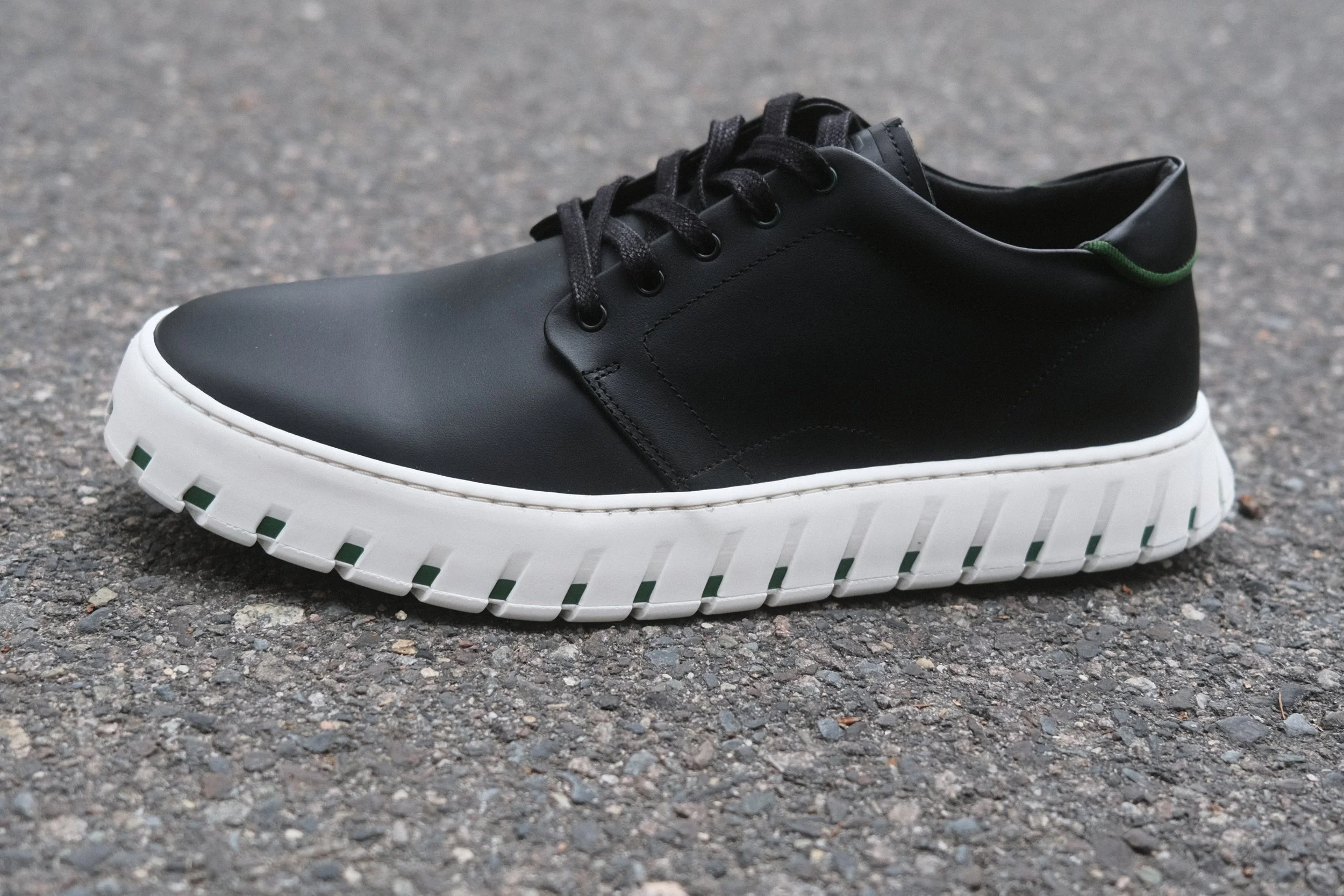
From that information, IAMBIC computationally generates an individualized last, the three-dimensional form around which a shoe is shaped. In conventional footwear, a person is assigned to the closest available size and width, both derived from standardized lasts designed for population averages. IAMBIC reverses the sequence. The last is generated from the person, and the shoe is then built around that geometry.
The process is closer in logic to bespoke shoemaking than mass-market footwear manufacturing, except Wang and her team are trying to compress what has historically been slow, expensive, and reserved for those with sufficient time and money into something repeatable and scalable. Once the scan has been completed, it does not need to become a recurring ritual. The resulting model becomes the basis for future shoes, refinements, and accumulated knowledge about the wearer.
Backwards
People adapt themselves to shoes rather than the reverse. A conventional last reduces the foot to a small set of generalized dimensions: length, width, and standardized proportions. Everything it fails to capture is negotiated through compromise. The shoe stretches. The foot compresses. The wearer adds an insole, rotates between pairs, tolerates soreness, or waits for the shoe to break in.
Wang sees those behaviors not as ordinary facts of wearing shoes, but as evidence of a system working in the wrong direction. Industrial footwear asks the body to accommodate the object because the object was designed to accommodate a category. Precision fit, in her view, means beginning at the scale of the individual body rather than treating variation as a problem to be averaged away.
At population scale, the consequences stop looking cosmetic. Poor fit alters pressure distribution and encourages compensatory movement. It can influence gait, balance, fatigue, and the accumulation of physical stress over thousands of steps and decades of use. People have simply become conditioned to accept the resulting discomfort. “They expect shoes not to fit perfectly. They expect a break-in period. They expect pain.”

Mobility
“Shoes aren’t accessories. They’re mobility devices.” Wang talks about footwear less like a fashion founder than an engineer confronting a systems problem hiding in plain sight. Shoes are the interface through which most people meet the ground. They transmit force, absorb impact, stabilize movement, and influence the relationship among body, surface, and terrain.
The distinction matters because accessories are generally evaluated through taste, expression, and occasion. Mobility devices are evaluated through what they enable. They are expected to support movement reliably, repeatedly, and without demanding that the user compensate for their limitations. Wang’s argument is not that shoes should lose their cultural or aesthetic significance, but that their functional importance has been obscured by the category in which they are usually placed.
An integrated system
For Wang, a shoe is not a collection of isolated components arranged around a silhouette. It is an integrated system in which geometry, material behavior, flexibility, support, and force distribution are designed to work together. Design begins with the relationships among its parts, the forces acting through them, and the conditions under which the object must perform. A shoe can be visually coherent and still be structurally conventional. Wang is interested in changing the underlying architecture.
The ambition is not orthopedic footwear disguised as innovation. She is adamant that functional rigor does not require aesthetic compromise. A shoe should preserve the cultural and visual language people want to inhabit while interacting with the body more intelligently. “There’s this assumption that you have to choose between something that looks good and something that feels good,” she says. “We don’t think that tradeoff is necessary.”
Chassis
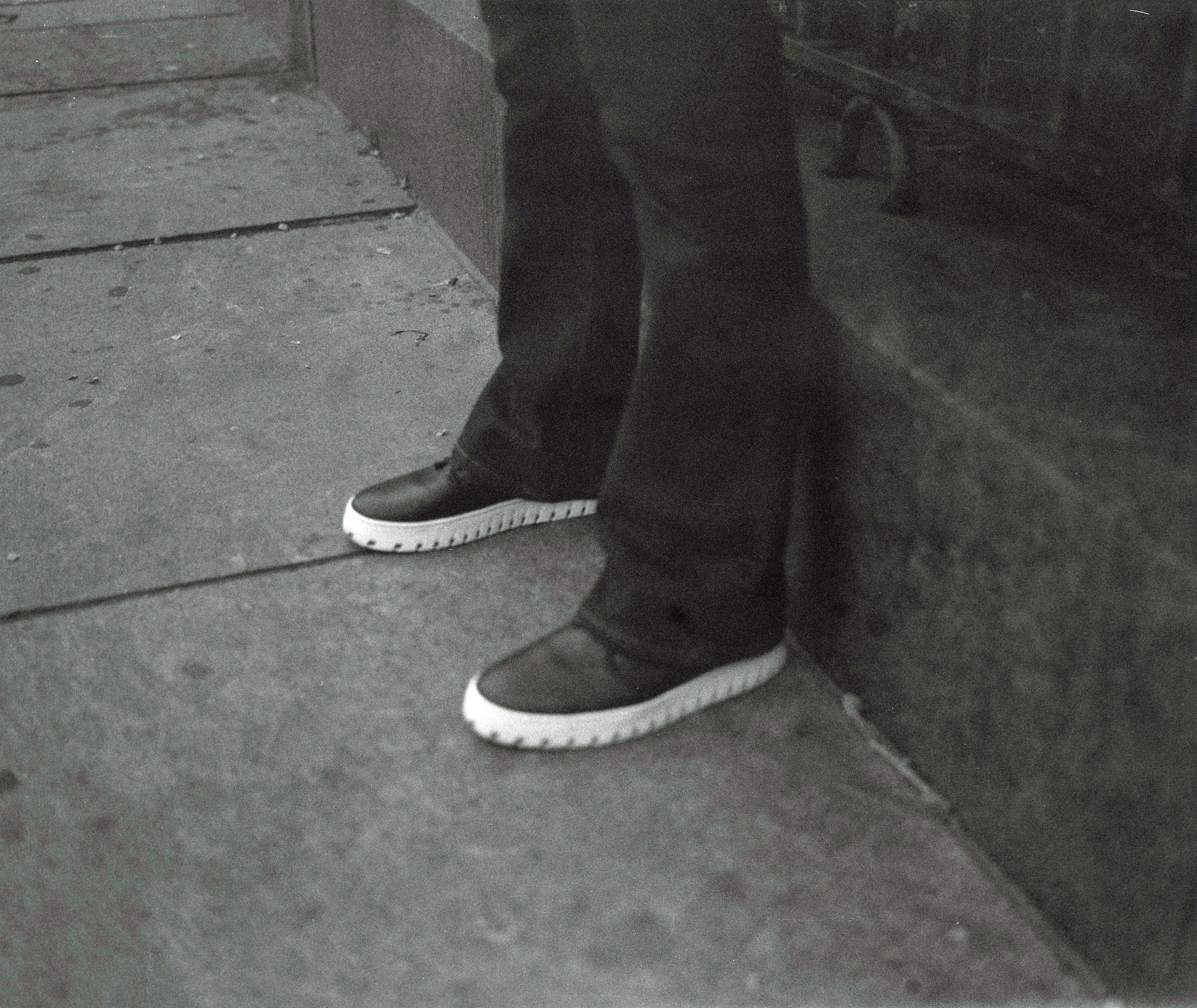
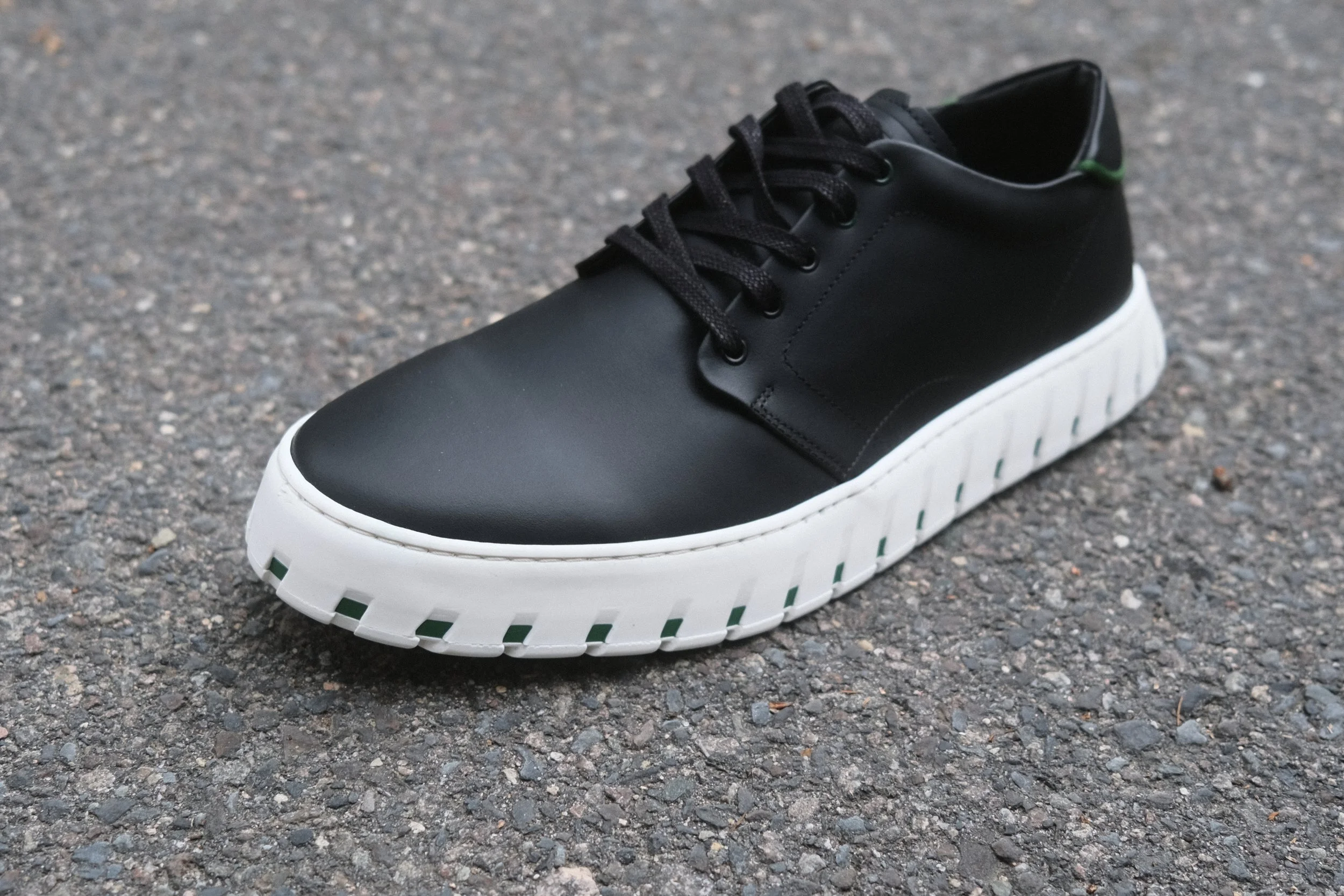
The clearest expression of IAMBIC’s design philosophy is the upper, which Wang compares to a monocoque chassis. In automotive engineering, a monocoque integrates the body and the load-bearing structure into a unified shell. Strength does not come primarily from a separate frame hidden underneath cosmetic bodywork. It emerges from the geometry and continuity of the structure itself. Loads are distributed through the whole rather than managed by disconnected reinforcements added after the fact.
IAMBIC approaches the upper similarly. Instead of treating support as a sequence of overlays, stiffeners, padding, and corrective pieces layered onto a generic form, the upper is designed to carry structure through its shape and material organization. The body of the shoe and its support system become the same thing. The heel anchor, sidewalls, sole layers, and upper are considered in relation to one another. The heel must be secured without simply clamping the foot. The sidewalls must manage lateral movement without making the shoe rigid. The sole must absorb impact while preserving enough responsiveness for the wearer to understand the ground. Flexibility and support are not opposing settings, but behaviors that must occur in the right places and proportions.
This is where Wang’s use of automotive language becomes more than metaphor. A performance car is not designed by independently maximizing its chassis stiffness, suspension travel, tire grip, and visual drama. Each variable affects the others. The value lies in orchestration. IAMBIC treats the shoe with the same systems logic: the interaction of parts matters more than the apparent sophistication of any one component.
Wear Bars
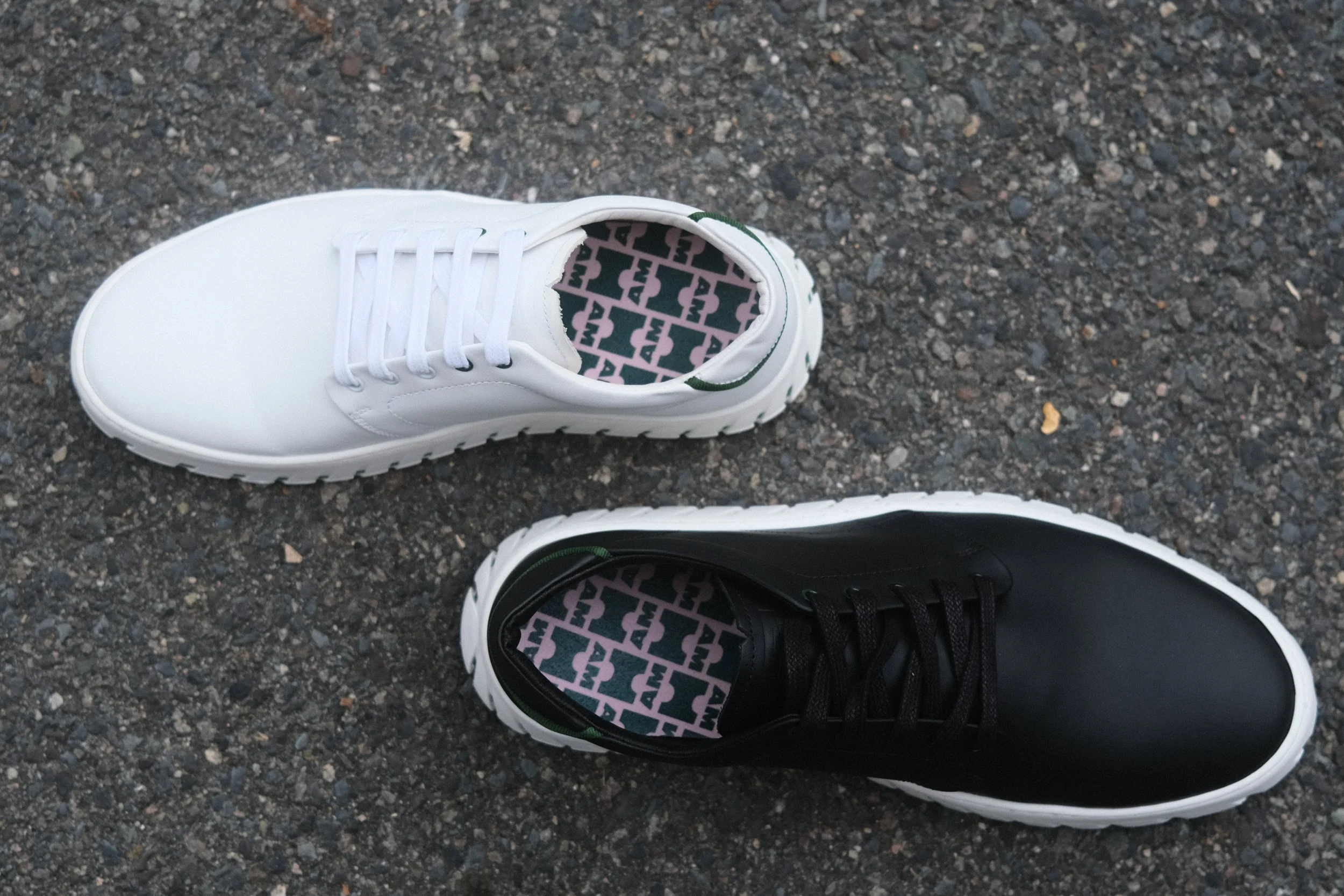
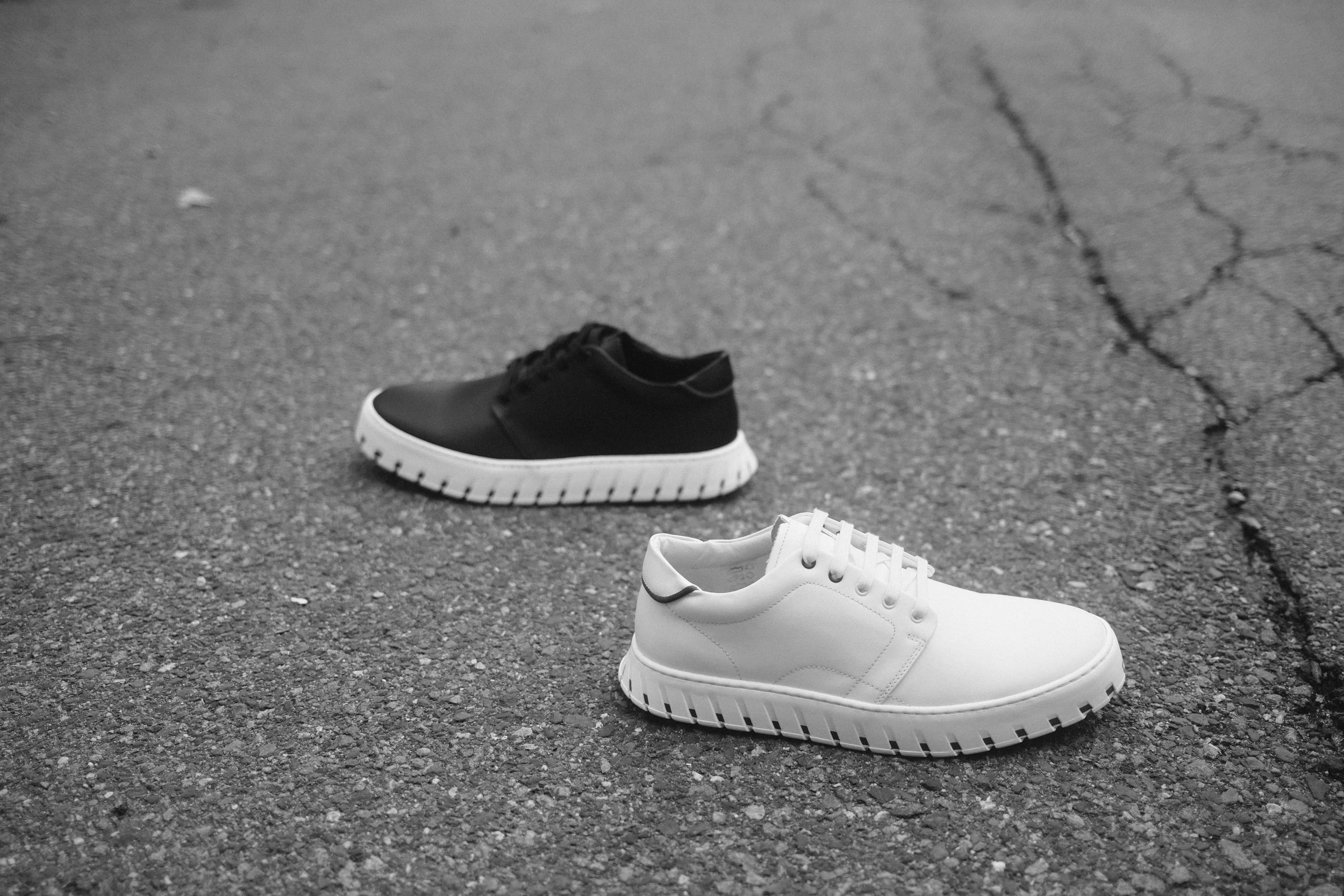
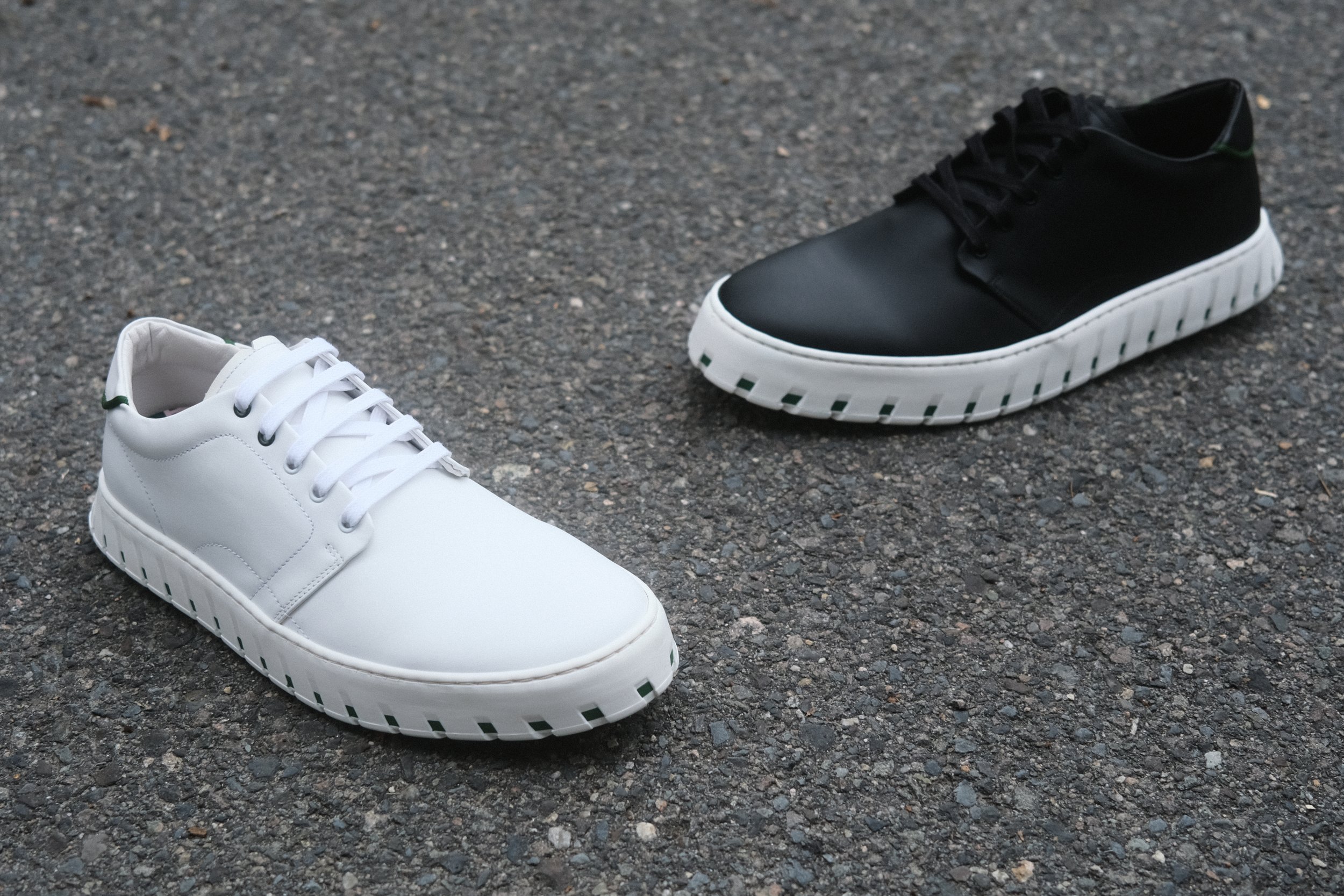
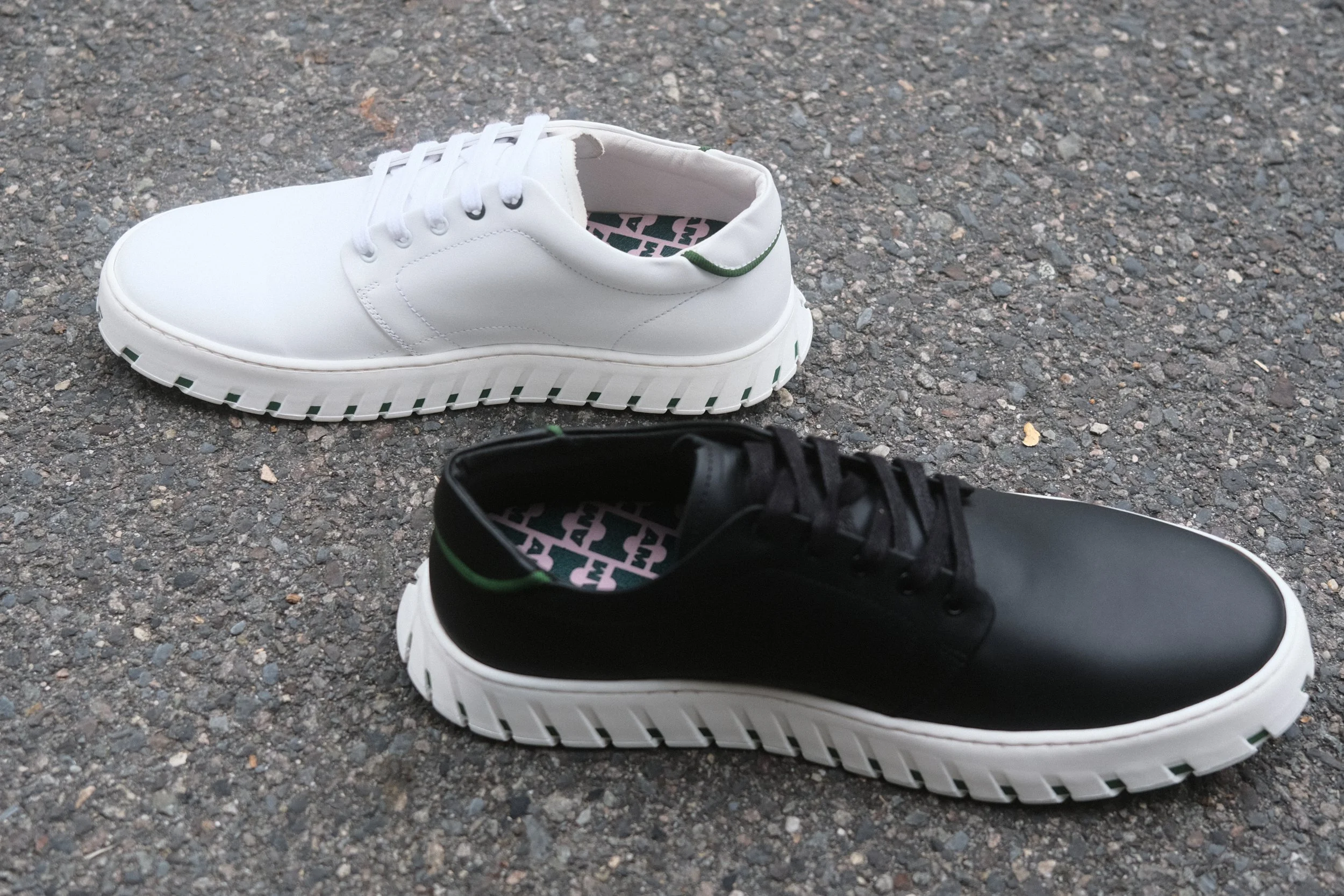
The sole is also designed as a record of use. “There’s no real feedback loop in footwear right now,” Wang says. A conventional shoe is designed, sold, worn, and discarded. Whatever the wearer’s movement reveals through wear is rarely returned to the design process in a structured way. IAMBIC’s layered sole construction is intended not only to manage cushioning, stability, and durability, but to preserve information. As the shoe is used, wear patterns expose how pressure and force move through it. Structural layers and wear bars function as passive data collection systems, recording aspects of gait and movement without embedding delicate electronics into an object expected to flex, absorb water, strike pavement, and survive repeated abuse.
The shoe therefore continues to reveal information after it has been made. The scan describes the body at one moment. Wear describes the relationship between that body, the shoe, and the world over time. Together, they create the possibility of a product that can inform the next version of itself.
That feedback-loop work is supported by research conducted through the Center for Biotechnology and by National Science Foundation-backed development through Small Business Innovation Research grants. The institutional framing matters less as a credential than as an indication of how Wang understands the problem: footwear can be treated as a technical, biomechanical, manufacturing, and public-health question, not simply a matter of consumer preference.
The Stirrup
“The pointed toe is a good example,” Wang says. “Historically, that shape comes from horseback riding, making it easier to get into a stirrup. It also signaled status, because it meant you weren’t walking.” The pointed toe survives even though the conditions that produced it have largely disappeared. Most wearers are not mounting horses. They are walking through cities, standing on trains, moving through airports, and spending long days on their feet. Yet the inherited geometry remains culturally legible, commercially durable, and structurally influential.
For Wang, this is evidence of the distance between styling and design. A form can persist because it signifies elegance, status, or familiarity even after its original function has become irrelevant. Industrial manufacturing then reinforces the legacy shape because repetition lowers risk. The form becomes normal not because it is well suited to the body, but because it is already embedded in the system. The pointed toe is an unusually visible example, but the broader argument applies throughout footwear. Many conventions are treated as inevitable even though they are historical artifacts. IAMBIC’s work begins by asking whether those inherited forms still deserve authority.
A Millimeter
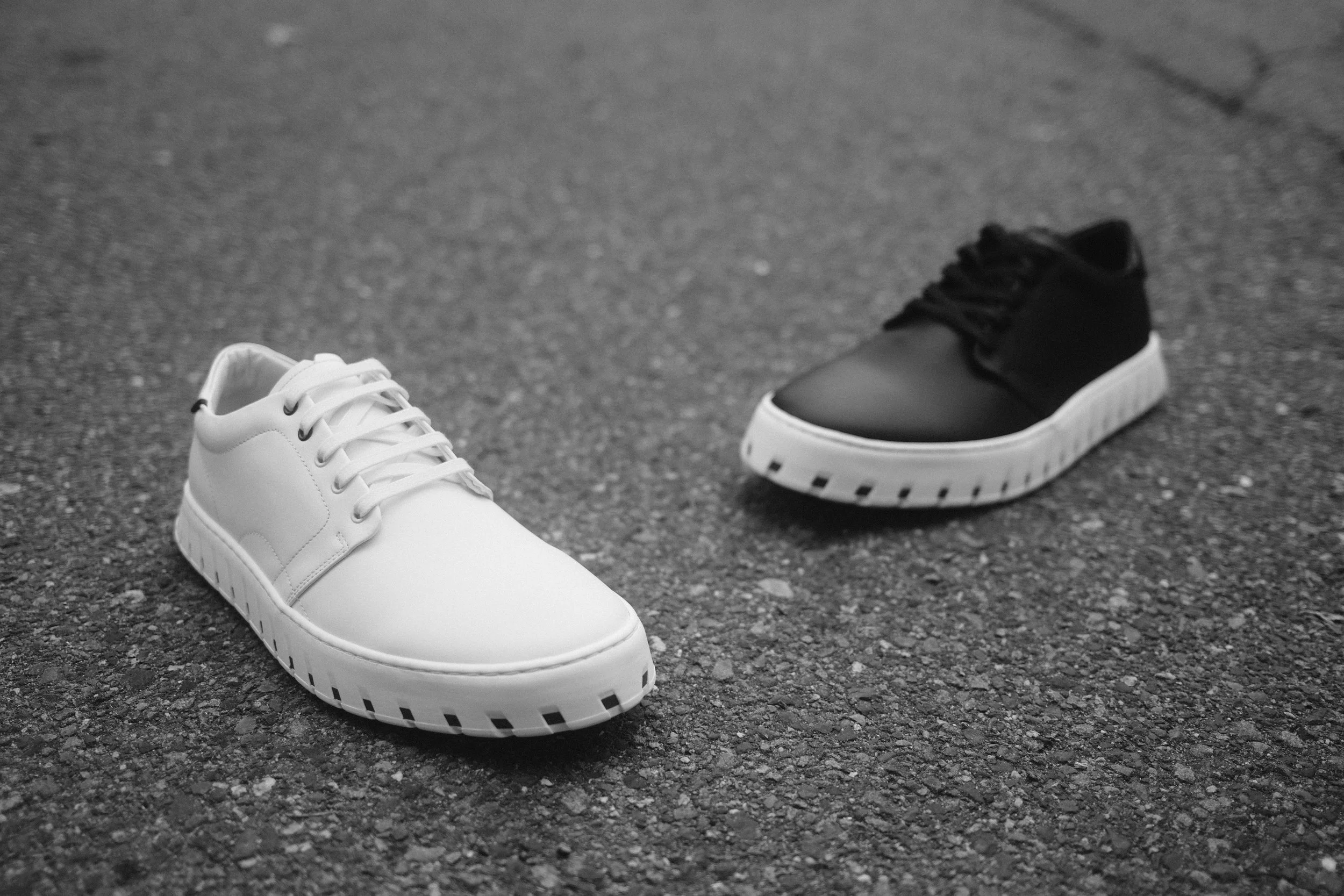
IAMBIC’s partnership with Motorsport Lab emerged from a shared interest in precision and the point of contact between body and machine. Motorsport Lab founder Ray Chang bought a pair of IAMBIC MODEL Ts before leading a three-day Motor Valley circuit through the Ferrari, Lamborghini, and Pagani factories in Italy.
Chang is an entrepreneur, an exotic-car enthusiast, and a basketball-obsessed sneaker collector. Before the trip, he was accustomed to traveling with several pairs of shoes and inserts, assembling his own system around the different demands of long days. During the Motor Valley trip, Ray tells me he covered roughly 100,000 steps across factory floors, cobblestone streets, airports, events, and extended travel days. It was the first time he had traveled with a single pair of shoes.
For Chang, the connection to motorsport was immediate. “If you don’t have good tires, you’re not racing.” A tire is not merely another component of a car. It is the interface through which every other system reaches the surface. Engine output, braking, steering, suspension, and aerodynamic load are meaningful only to the extent that the tire can transmit them. Small differences in compound, temperature, pressure, alignment, and contact patch alter the behavior of the entire machine.
Chang understands footwear through the same logic. “My feet are everything,” he says. The phrase is blunt, but it describes the physical reality of a long trip. Whatever sophistication exists elsewhere in the experience, the body still has to stand, walk, wait, and move. Before IAMBIC, his solution was “three shoes and inserts.” With the MODEL T, it was one. “In Formula 1, everything is optimized,” Wang says. “Every variable is considered, and small changes matter. A millimeter matters.”
Formula 1 applies extraordinary resources to the movement of twenty-two drivers. IAMBIC’s argument is that the underlying principle should not belong only to elite competition. Billions of people spend their lives moving through the world in shoes built from generalized approximation, even though small discrepancies in fit and structure also compound across time. The point is not that every shoe should become a racing product. It is that ordinary movement deserves serious design.
Standardization
Industrialization required standardization. Products became less expensive because they could be repeated, and they could be repeated because variation was reduced. The shoe last sits at the center of that bargain. Standard lasts allow factories to organize tooling, patterns, sizing, inventory, and distribution around predictable categories. The system works efficiently as long as the individual body is willing to accept the nearest available approximation.
Human bodies adapted themselves to industrial systems because industrial systems could not economically adapt themselves to individual bodies. Wang’s central bet is that computation can invert that relationship. A personalized last can be generated from a digital model rather than carved by hand. Patterning and manufacturing information can flow from the same data. Variation no longer has to be treated entirely as inefficiency because parts of the process can change computationally rather than through the reconstruction of the whole production system.
This does not eliminate the realities of manufacturing. Materials still have tolerances. Factories still need repeatable procedures. Products still have to be made at viable cost. But computation changes where standardization must occur. The process can be standardized even when the geometry of the product is not. That is the larger proposition behind IAMBIC. Customization is often presented as the addition of choices: colors, materials, monograms, interchangeable details. Wang is pursuing something more structural. The system remains scalable while the form becomes specific.

Access
The MODEL T is $600, made in Portugal, and delivered in 4 weeks. Well-made Italian footwear routinely runs $500-$1,000 and is made on a standard last. True bespoke runs $3,000-$10,000 and can take up to 12 months. IAMBIC’s is a concentrated product, carrying the cost of scanning, computational modeling, individualized last generation, research, and a manufacturing system still being developed at relatively small scale.
Wang does not describe the price as the destination. The purpose of the current product is to establish the system: to prove that individualized geometry can move through a repeatable process, that the resulting shoe can perform across different conditions, and that the information generated through wear can improve what follows. The MODEL T is HSA/FSA eligible: within an existing healthcare framework, the shoe can be recognized not simply as an item of fashion, but as an eligible health and wellness expense.
Wang is not trying to make bespoke footwear more exclusive. She is trying to make its underlying benefits less exclusive. The goal is not simply a better shoe. It is a manufacturing system capable of treating individual bodies as the starting point rather than the deviation.
Maeve Wang is the co-founder and CEO of IAMBIC, an AI-tailored, precision-fit footwear company based in New York City. Through the MODEL T, Wang and her team apply smartphone-based 3D scanning, computer vision, individualized last generation, and government-backed research to design shoes around each wearer’s biomechanics, preferences, and movement. She came to footwear from wearable technology and digital health investing, and started IAMBIC to make the case that shoes are mobility devices whose form should follow from the people who wear them.
Written by Chessin Gertler | Photography by Chessin Gertler