
Athlete | Georgia Hamblett
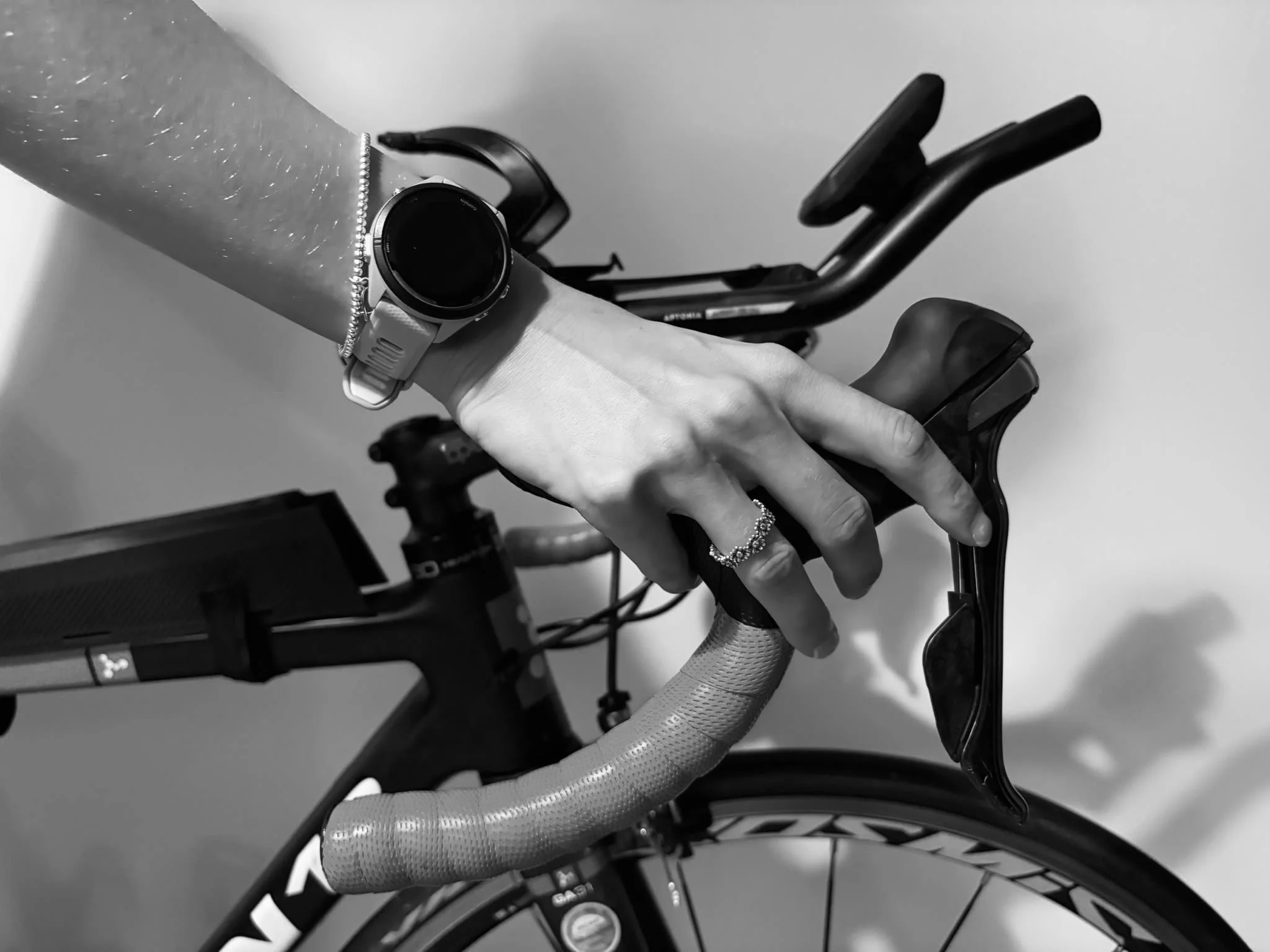
My Lycra fits fine
Clothes shopping: one of my least favourite things. At least nowadays I don’t have to go to the shopping centre. Teeming, closely packed corridors and bright, flashing displays are not my scene. I’m more of an outdoorsy kind of gal. I unwrap the jumpsuit and before I have even tried it on, know what the issues will be. Still, I try it on anyway. My legs are too big for the trousers, yet the garment is baggy around my waist. The top half is an even more abysmal affair, with the shoulder seams sitting a far cry away from my humerus and nearer to my neck. My broad shoulders stretch the fabric across me, whilst the neck hem sits completely wrong against my chest. The seams are all in the wrong places, there is too much fabric in some areas and nowhere near enough in others. I begin to take off the jumpsuit; it practically falls off me before hitting a limb which can only escape using a delicate, well-developed peeling technique. These clothes were not developed for women like me. They were developed for curvaceous women with a feminine frame, not women with a muscular, athletic build. I don’t care. I don’t want to be that kind of woman anyway. I’m an athlete. My Lycra fits fine.
I’m an athlete
‘I’m an athlete’ is used to explain an ever-growing number of things. I need to eat eight times a day and the food needs to contain enough carbs and protein because, well, I’m an athlete. I need an early night tonight (as per every night) because I’ve to be up early to train before work tomorrow because, well, I’m an athlete. Our holidays next year will be (heavily) influenced by my race calendar and yes, the majority of my disposable income will be going towards sports kit and racing because, you guessed it, I’m an athlete.
From the turbo trainer in the living room to the swimming costumes hung drying on rotation in the bathroom and the half drunk, half mouldy bottles of carb drink festering beside the kitchen sink, my house is littered with reminders that a normal soul doesn’t live here. This is an athlete’s house. That’s who I am.
And boy do I love the quirks of being a triathlete, cyclist, swimmer and runner. For someone who has often struggled to feel they ‘fit in’, going to a sports event and being able to chat to others about our favourite post training snacks and how a looped route is so much better than an out-and-back gives me a sense of belonging and feeling that, although I train alone, I’m part of a bigger community.
I’m an athlete. That’s who I am, and who I like being.
And that can be a problem.
For almost eight years, I struggled with RED-s (Relative Energy Deficiency in Sport). This is when you don’t consume enough calories to support your training, and your body goes into ‘starvation mode’, downregulating things such as hormonal and reproductive health, thermal regulation and illness resilience. It is not a healthy state to be in, and can lead to complications such as fertility loss and low bone density. The remedy? Eat more, exercise less, and potentially gain a little weight. It sounds easy, right?
For those struggling with RED-s, there are often more psychological factors at play, such as disordered eating or exercise addiction. But regardless of whether or not these have contributed to one’s diagnosis, recovery is usually a difficult road. Eat more, exercise less, potentially gain a little weight. What will that mean for my performance? For my routine? For my social life? I’ll stop feeling like myself. And, amidst other things, this perceived attack on my identity acted as a crutch on which the illness could balance, preventing me from dedicating myself to recovery. I was aware of the risks, aware of the impacts on my long-term health, aware that I was sacrificing my future longevity. But that did little to motivate me. I couldn’t see past the road block. I didn’t want to stop feeling like me. I didn’t want to stop doing what I enjoyed. I didn’t want to lose my identity and become someone else.
It isn’t just me
I’ve heard countless stories of athletes pushing through injury or illness, reason being they ‘don’t know who they are without sport.’ The irony of this is that in trying to keep going when our bodies need to rest, we’re simply elongating the time before we can be the happiest version of ourselves again. This question of identity is also seen in elite sport. How many times have we heard retired professional athletes speak about feeling lost, directionless or not knowing what to do with themselves? Or turning to coping mechanism such as drugs or alcohol to deal with these emotions and try get the same feelings sport invokes? Athletes tend to be the most driven sorts of people, and without sport as an outlet to explore this within, sadly many of us can turn to less wholesome things.
Identity isn’t just something athletes have to deal with. As we hear more and more about AI ‘coming to take our jobs’, our thoughts turn to ‘who would I be, if I didn’t work?’ This has always been a dilemma, with worries about a lack of purpose or how to fill the spare time playing on many peoples’ minds when they contemplate retirement. It’s not just an athlete problem.
An identity antidote
But perhaps the antidote is a universal one, and applies to athletes, workers, entrepreneurs, musicians, artists and circus entertainers alike. The dictionary definition of our identity is not one sole interest or venture, and our self-worth does not balance on success in one area of our lives. The best way I’ve found to overcome this identity crisis, and I believe one of the fundamental shifts in mentality I had to have to overcome my RED-s, is to see sport as just one aspect of my life. I think this can be the case no matter if you’re an enthusiastic amateur or the best in the world. Even if sport is the only thing you feel you’re good at, you have so many other qualities as a person – a partner, a sibling, a friend, a sister, a son – and have so many other things to discover outside of sport. Embracing and allowing yourself to explore new things, be bad at them, laugh at them, enjoy them, give us experiences that shape us as people, not just as athletes.
But don’t get me wrong…
I love to describe myself as an athlete. And a big part of my identity is related to sport. If I’m not doing sport, I’m most likely writing or reading about it. When I can’t train for whatever reason, yes, I feel like a part of me is missing. If I couldn’t write about the issues in sport which excite or interest me, I’d feel as if part of my purpose had been taken away. But equally, I’ve learnt to not tie my self-worth to my ability to do these things. I’m still worthy of rest, food, love, pretty sunrises and a nice coffee whether I can run a 10k or not.
Easier said than done sometimes, I know. And perhaps it isn’t so much a question of identity, but one of self-worth. Although oftentimes, the two are heavily interlinked.
You are an athlete
But you’re also a friend, relative, book-lover, croissant muncher, bird-song appreciator and thought-provoking article reader. And regardless of how these fit together in the pie-chart of your identity, you’re always worthy of self-love.
Georgia is a freelance sports journalist, technical author and competitive age group triathlete originally from Yorkshire, UK. She has won various national and international Age-Group medals, including English Middle Distance Triathlon Gold and European Aquabike Gold. She loves the challenge of combining her two biggest passions, writing and sports, with a particular interest in creating conversation around the mental health of athletes.
Written by Georgia Hamblett | Photography provided by Georgia Hamblett