
When I spoke with Stefan Ytterborn about the rise and collapse of CAKE for Purpose, I came away thinking our conversations would make a compelling business school case study. The electric motorcycle company had become something of a poster child for the possibilities of two-wheeled electric mobility, its ambitions fueled by an era of cheap capital, enthusiasm for the green transition, and investor confidence in direct-to-consumer businesses and rapid growth. CAKE made electric two-wheelers desirable to people who had never considered riding one, established an instantly recognizable—if controversial—design language, and helped redefine what a motorcycle might be. But as rising interest rates and a retreat from speculative investment abruptly changed the funding environment, CAKE's seemingly unstoppable momentum gave way to a combination of financial pressures and internal missteps—both of which Stefan discussed candidly with me—that led to bankruptcy.
Having followed CAKE so closely, and with a sense of pride in its ambitions that felt personal, I was genuinely shocked by its collapse—as, I imagine, were many of the brand’s admirers—and grateful for the opportunity to ask Stefan what had happened and why. What interested me most was what could be learned from the extraordinary distance between its cultural success and its commercial outcome. I had imagined those lessons might be valuable to others; I hadn't anticipated how directly they would inform the next endeavor to emerge from the Ytterborn family.
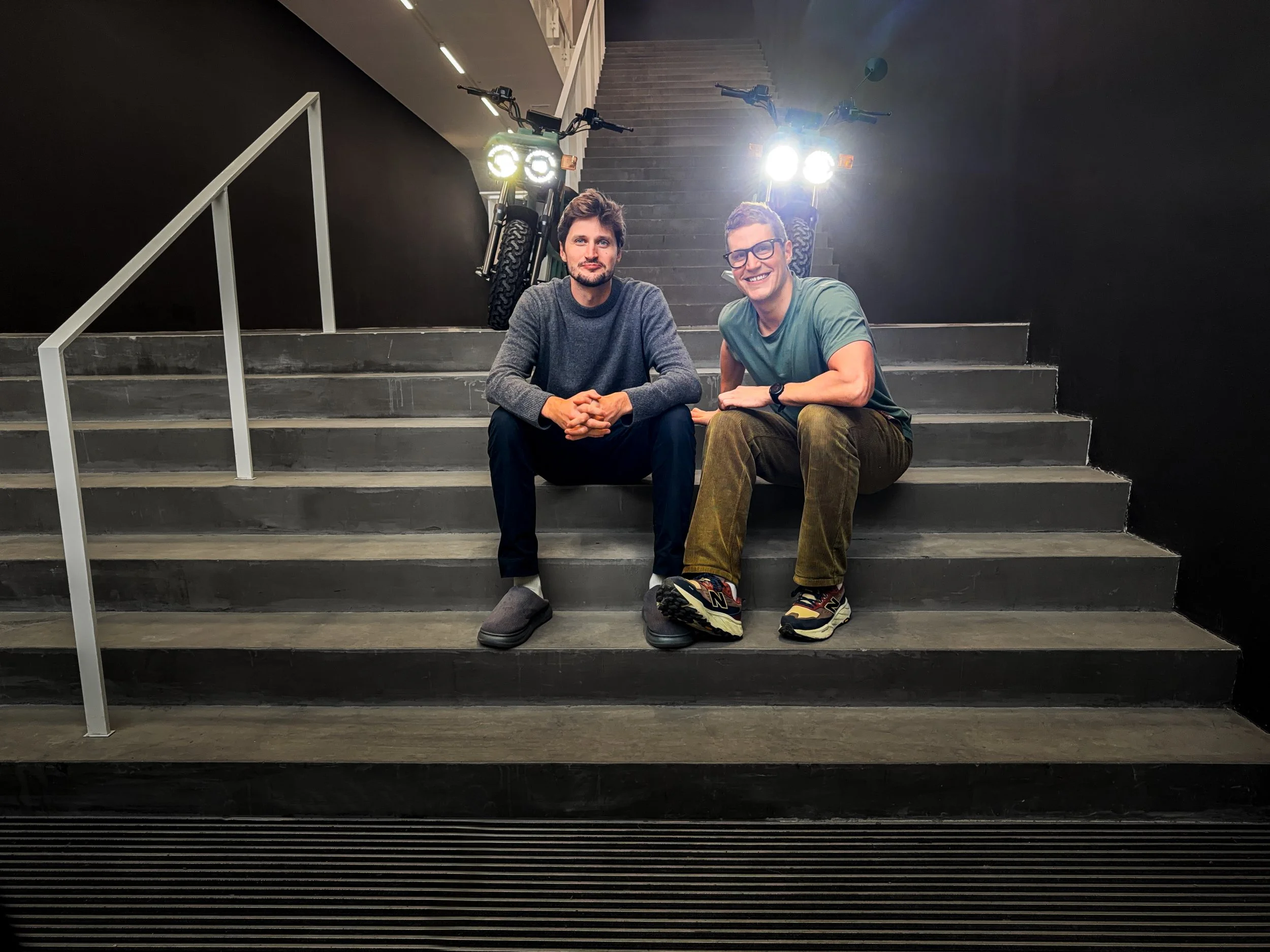
ReBake was founded by Karl and Nils Ytterborn, Stefan's sons, who spent their formative professional years building CAKE and ultimately living through its collapse. While ReBake is independent of CAKE, which continues under new ownership, the two stories are consciously linked, with the Ytterborns drawing on the lessons of that difficult experience to inform an evolved approach.
Karl describes CAKE's ending as a “shot in the heart.” A lead investor withdrew from a bridge financing round, and the business collapsed with a speed that shocked even those closest to it. The emotional consequences were considerable; so was the accumulated knowledge that threatened to disappear with the company. A few months after the bankruptcy, Karl and Nils began making two lists: what CAKE had done well, and what it hadn't. Both were long. They had spent years doing demonstrations, speaking with prospective riders, responding to customers and confronting the mundane difficulties that never appear in a beautifully photographed launch campaign.
ReBake is not trying to build a cheaper CAKE, nor is it trying to recreate the moment when venture capital, electrification and an appetite for category-defining design seemed to be moving in the same direction. That moment is long gone. In Karl's telling, the war in Ukraine and a wider sense of geopolitical instability redirected attention and investment away from the green transition. As an American, I find his on-the-ground European perspective illuminating, offering insight into shifts in anxieties and priorities that I was peripherally aware of but hadn't fully appreciated. Businesses postponed fleet electrification, investors found other priorities, and the electric two-wheeler industry, already difficult, became unforgiving. One need not accept this as the complete explanation for the sector's troubles to recognize that ReBake is entering a markedly different world from the one that welcomed CAKE.
The next electric motorcycle company cannot depend on the world becoming more accommodating but has to work with it as it is. The first manifestation of that idea is a return to a more classic business model. CAKE sold directly to consumers. In theory, this offered control over the relationship and the full retail margin. In practice, motorcycles are not particularly well suited to being purchased on faith. People want to sit on them, ask questions and ride them. CAKE responded with showrooms and an elaborate mobile test-ride operation. I remember driving out to meet a van at my parents' suburban home outside Boston so that I could try the bikes myself on quiet roads. It was a remarkable service. It was also a remarkable amount of infrastructure to build around a single prospective customer.
Karl remembers that a field team might manage two test rides in a day. The conversion rates were good, but the economics of maintaining the experience were punishing. Meanwhile CAKE was developing proprietary components, manufacturing systems, supply chains and quality-control operations of its own - effectively attempting to establish several businesses simultaneously, with the expectation that scale and continued financing would eventually make the whole enterprise viable. ReBake has chosen not to repeat that experiment. Its motorcycles will be manufactured with an established production partner, while ReBake retains its designs, tooling and intellectual property. Distribution will follow the familiar manufacturer-to-distributor-to-retailer chain. Customers will be able to test, purchase and service their bikes through local dealers. Margins will be shared with intermediaries, but so will the burden of building and maintaining the infrastructure.
There is nothing revolutionary about the arrangement, which is the point. The same thinking extends to the bike itself. Aesthetically, CAKE's motorcycles fell more into the category of museum-worthy design objects; their components contributed to an design language that was, while controversial (a positive in Stefan’s mind), unmistakably their own. But that singularity carried a cost: a proprietary handlebar or brake component cannot necessarily be replaced with something from the shelf of a neighborhood workshop; a small broken part could become a major supply-chain problem. We have seen a similar tension emerge in high-end cycling, where the proliferation of proprietary components and integrated systems during the pandemic-era boom promised improvements in performance and aesthetics, but also introduced new frustrations around maintenance, compatibility, replacement parts, and cost. In both cases, the pursuit of refinement risks the competing forces of practicality.
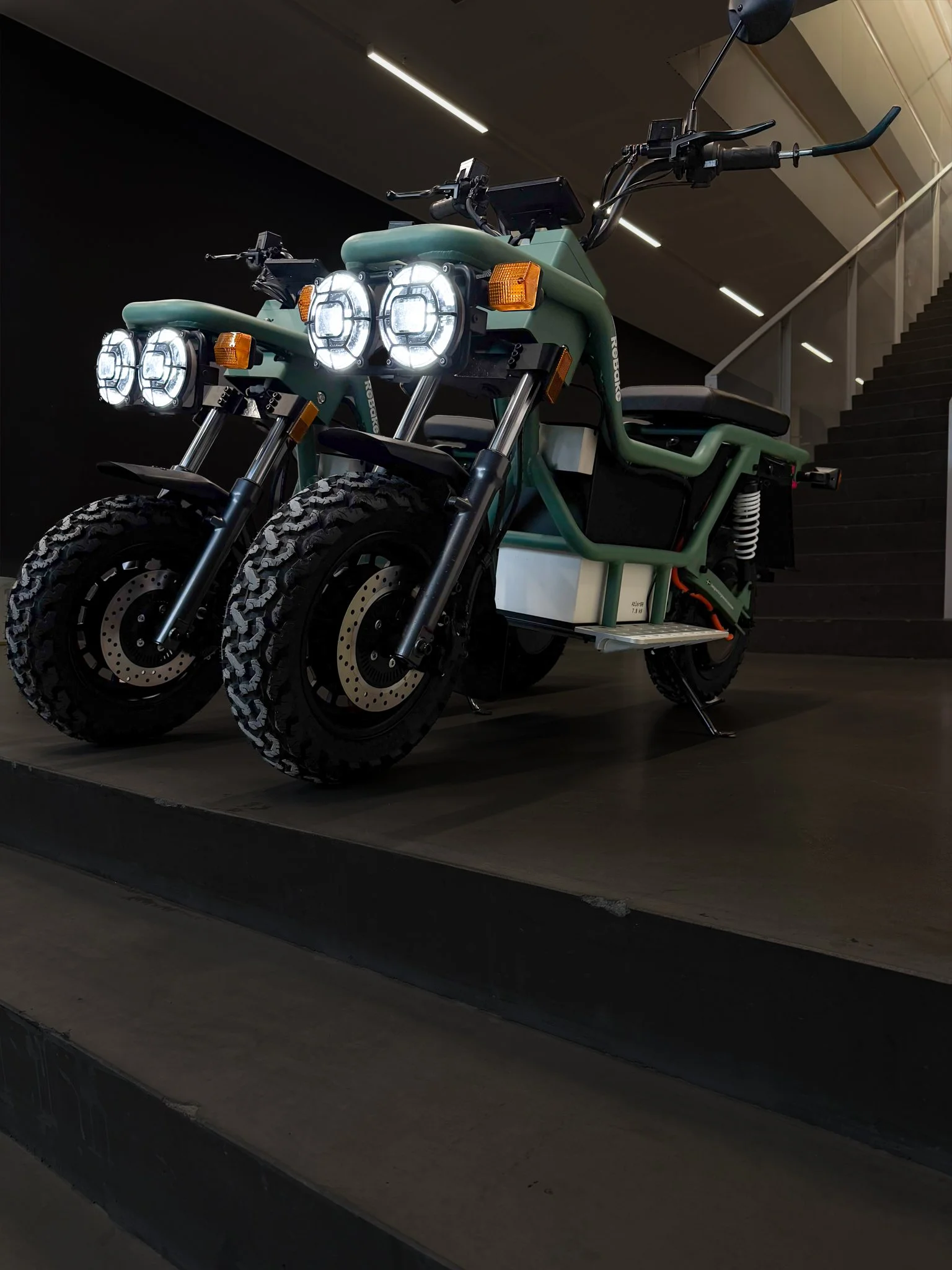
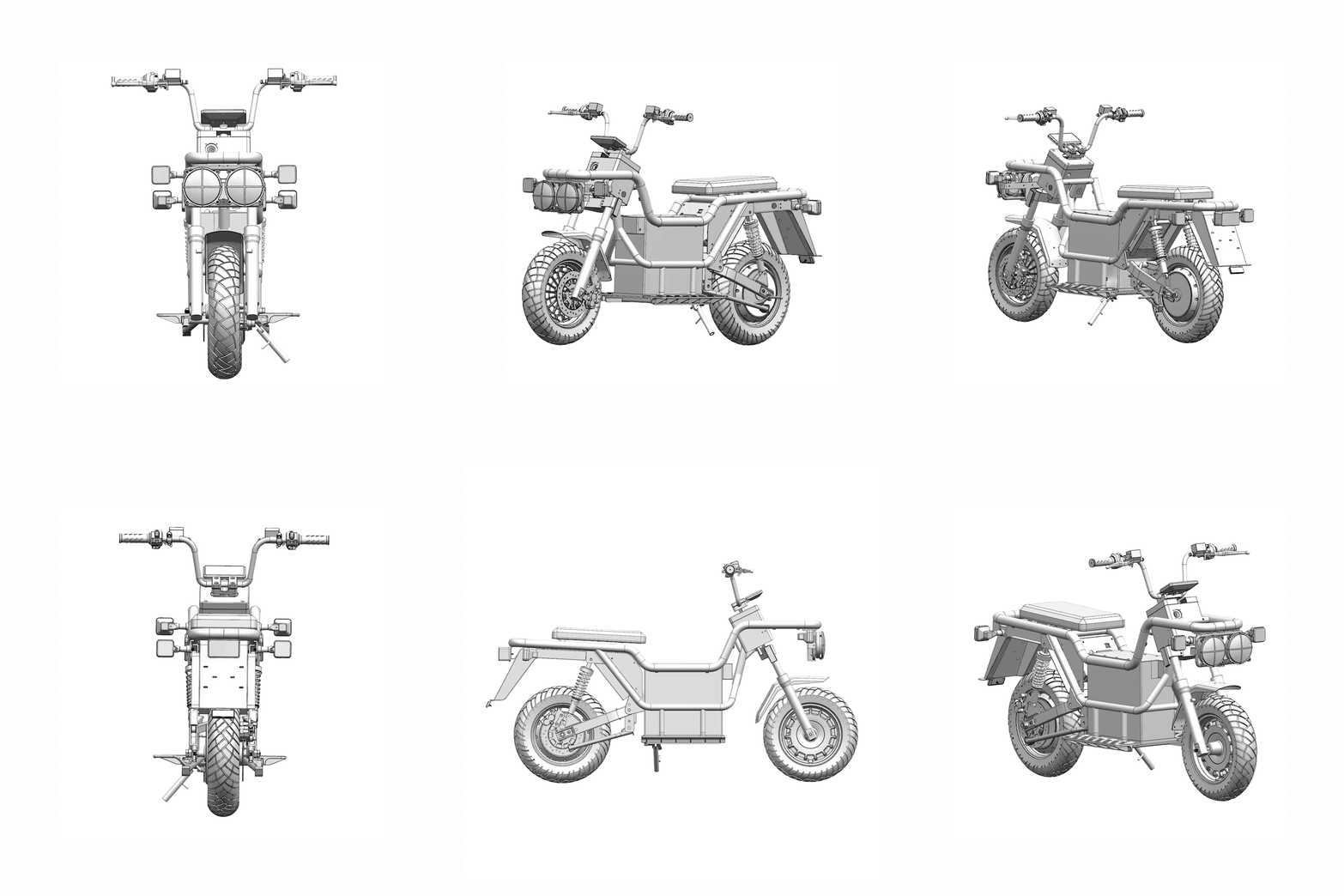
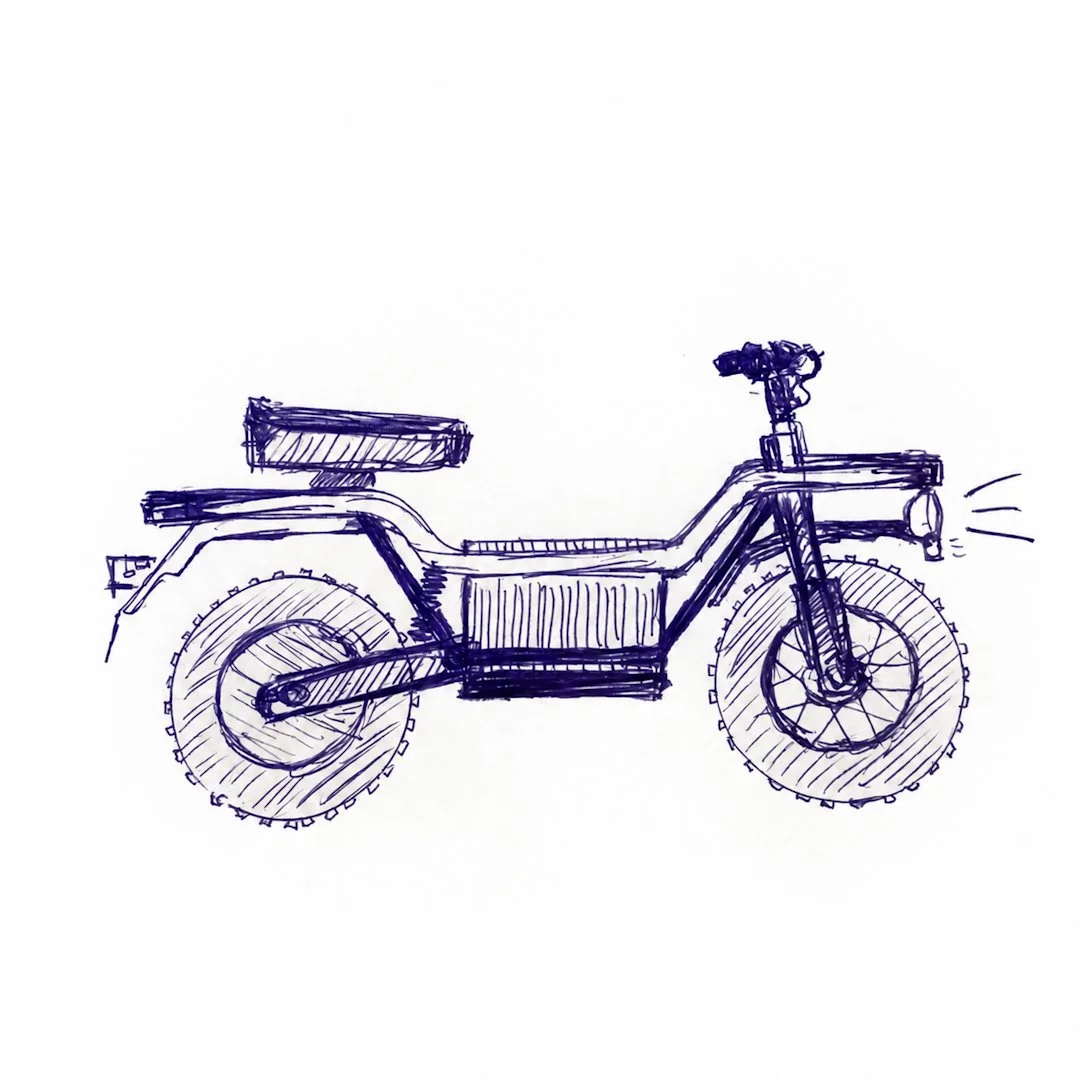
The handlebars, stems, and smaller components of ReBake’s first model, the Abler, use standard dimensions wherever possible. The objective is not simply to streamline production, but to make ownership less fragile as well. A customer should not have to wait weeks for a bespoke replacement when an ordinary compatible part will do. This is an admittedly less glamorous form of sustainability than the rhetoric surrounding the first wave of electric mobility: a functional tool can be easily maintained. The same pragmatism extends to the Abler’s construction. Its frame is built from substantial 42-millimeter aluminum tubing, with large, conspicuous welds left exposed rather than polished away in pursuit of visual delicacy. There is an unmistakable family resemblance to CAKE in its Nordic restraint and clean geometry, but the details tell a different story. The lights, fenders, suspension, tires, and visible hardware belong to a utilitarian vocabulary rather than a collection of precious, individually sculpted objects. Karl acknowledges that CAKE’s components could be works of art. With the Abler, the emphasis has shifted to optimizing the experience as a whole.
At roughly 110 kilograms with a battery, this is not an exercise in lightness. Karl argues that chasing grams on a practical urban commuter offers little benefit compared with adding material where it improves durability. The frame was also lowered and narrowed during development after early prototypes proved better suited to someone of Karl’s height (6'3") than to shorter or less experienced riders. The goal is manageability across a broad range of bodies, not specification-sheet sexiness.
There is a limit to what I can say about the Abler at the moment: I have not seen it in person, let alone ridden or lived with it. And that lived experience is ultimately the test of a motorcycle, whatever its intentions or engineering pedigree. It is only through use that the ambitions behind its design can be properly evaluated. Does the relationship between rider and machine develop into something useful, intuitive, even symbiotic? Or does it remain an interesting idea that never quite finds its place in the life it joins? For now, I am examining the thinking behind the Abler, not passing judgment on the experience it delivers. And while its construction may lack the aesthetic refinement of its predecessor, I don't regard this as an abandonment of design, but rather an evolution in its understanding.
The most revealing details are perhaps the least spectacular. At CAKE, the modularity of the motorcycles allowed customers to configure them with an extensive range of accessories, but a passenger seat and basket could add roughly a third to the advertised price. Some accessories arrived separately and required assembly by customers who had chosen the bikes precisely because they did not consider themselves mechanically inclined. The Abler takes a different approach, incorporating mounting points directly into its frame, including at the front, rear, and around its flat battery enclosure. Cargo plates and simple clamps allow ordinary crates and other equipment to be attached without the need for an elaborate proprietary ecosystem. Two-person riding is accommodated without a costly seat upgrade, while the batteries remain removable for charging away from the vehicle. ReBake will even recommend compatible equipment made by other companies, including cargo trailers, on its website without attempting to sell it themselves or collect royalties. Karl sees little reason for a team of four and a half people to spend years developing a proprietary trailer when someone else already makes a perfectly good one. The forgone accessory revenue is a deliberate trade-off in favor of focus.
This uncertainty is particularly interesting with electric motorcycles. On a combustion bike, so much of its personality radiates outward from the engine: its configuration, the way it makes power, its sound and vibration, and the physical design that accommodates - and celebrates - these unique qualities. An electric motorcycle is, in many ways, far more malleable. Throttle response, power delivery, regenerative braking, and other aspects of its behavior can be shaped through software without fundamentally changing the hardware. Two machines that look nearly identical can feel entirely different, while the same machine can be programmed to deliver different experiences. The character of an electric motorcycle may therefore be less immediately apparent from its physical form, making the experience of riding it all the more essential to understanding its design.
ReBake's decision to dispense with connectivity adds another dimension to this relationship. No companion app, no software updates, no dependence on a digital service. Karl's explanation is straightforward: people are irritated when connected products fail to work as expected. In ReBake's case, this simplicity is a feature, not a missing one. This became unexpectedly significant when the Swedish Armed Forces began evaluating the Abler. Karl had attended a dual-use technology event through Stockholm's Sting incubator, surrounded by ambitious presentations of future systems. He arrived with something comparatively unremarkable: a physical concept rather than an idea. The Armed Forces subsequently purchased a prototype for further evaluation. Its potential appeal was not mysterious: it could move personnel and equipment efficiently across large sites, accept different cargo arrangements and require relatively little maintenance. Particularly resonant in this global moment, the lack of connectivity also meant, as Karl puts it, “there's nothing to hack.”
A parent in Stockholm, commuting with a child and groceries, and a military technician crossing a large installation might seem to have little in common, yet both want carrying capacity, ease of use, and reliability. CAKE's original logic, as Stefan explained it to me, drew much of its legitimacy from demanding off-road capability, even when many customers would ultimately ride in cities. Despite some later skepticism, I found that compelling at the time, a little like the mythology of a Land Rover whose owner rarely ventures beyond paved roads. ReBake effectively reverses the proposition: it is engineered around the ordinary demands of urban and suburban life, and that practical competence may make it useful in more edge-case environments as well.
Karl calls the Abler an “SUV on two wheels”. I am generally suspicious of automotive analogies, particularly ones borrowed from a category that has become synonymous with excess, but I understand the intention. This is not a leisure object awkwardly adapted to errands, but a working vehicle intended to carry people and things over the distances where a bicycle can become inconvenient and a car is excessive. ReBake identifies a particularly useful range of roughly 10 to 30 kilometers. The Abler will be offered in 45 km/h and 80 km/h versions, corresponding to different European licensing categories and regional needs. The two share most of their hardware. The battery compartment can accommodate two removable batteries; with one installed, ReBake will recommend the forward position for better balance.
The company introduced the Abler at EICMA 2026, and will be initially concentrating on European markets where it can establish appropriate distributor relationships. An American launch remains an ambition, but Karl is wary of the costs and uncertainties of entering the United States before the right partner is in place—another decision that would once have sounded insufficiently aggressive in a venture-capital pitch and now sounds like a reasonable exercise of judgment.
• • •
I have written about companies whose leaders want consciously to move beyond the past. Karl and Stefan speak about CAKE with pride, disappointment, affection and openness. They do not believe its bankruptcy invalidated everything it accomplished, nor that its accomplishments excuse everything that went wrong. The history remains present in ReBake, not as a burden to conceal, but as knowledge applied. That is what I see in the Abler: the broad tubing, exposed welds, standardized hardware and an absence of digital ornament are not signs of diminished ambition, but rather, express a company more certain about which problems it wants to—and believes it can—solve. There is a boldness to that humility, which I am excited about. After the exuberance of CAKE, perhaps the most radical thing ReBake can do is build a motorcycle that asks for less, delivers something specific, and is prepared to be judged by that. In 2027, that is the foundation from which progress needs to be defined.
Karl Ytterborn is the Founder and CEO of ReBake. A lifelong rider and advocate for electric mobility, his interests extend beyond two wheels into fishing, surfing, skiing, and the outdoors.
Written by Chessin Gertler | Media provided by Karl Ytterborn