
Ampersand | Maximilian Büsser
I came to my conversation with Max Büsser pushing a theory: standardized timekeeping helped bind humanity into a cohesive global web. Clocks synchronized cities and the settlements between them, allowing trains to run on common schedules and industrialization to find greater efficiency. They created an early virtual layer of human connectivity; a proto-web of temporal alignment. The wristwatch made that system portable, affixing this new shared lattice directly to the human body—perhaps the first step in humanity’s ongoing evolution toward cyborgdom. Less grandiosely, mechanical timekeeping opened a new frontier of connection among human beings, their environments, and one another that continues to expand with unprecedented rapidity.
Today, a much broader digital infrastructure reaches us through countless forms of media and devices. Beyond its productive utility, the connected web in which we exist manifests in myriad destructive ways; in constant distraction, fractured attention, and the gradual surrender of our autonomy. My assertion to Büsser was that the mechanical watch has now assumed the opposite functional and symbolic role from the one it originally possessed. No longer an instrument for connecting its wearer to the world, its contemporary allure lies in its disconnection from it, or perhaps the status obtained from the luxury of that disconnection.
This seemed especially relevant to Büsser. The founder of MB&F has repeatedly described his own work as “pointless.” His machines can require years to develop, often more than a year to manufacture and finish, and weeks for a watchmaker to assemble. They address a problem already solved more accurately and incomparably cheaply by quartz.
I asked Büsser what the point actually was. He rejected my theory immediately. “I don’t think, unfortunately, it takes us away from the doom scrolling. We are a generation, however old we are, of dopamine addicts.” The watch would not save us from the screen. Its purpose, he argued, was something more fundamental: to reconnect us with the increasingly rare cohort of human beings who still make things.
• • •
MB&F watches are theatrical—mechanisms exposed, elevated, inverted, suspended, often given the architecture of spacecraft and likeness of animals. They are not discreet. Even the comparatively classical Legacy Machines place their balance wheels above the dial, making the regulating organ part of the visual landscape. When I asked Büsser to explain his work without relying on the familiar description of a timepiece, he did not begin with form. “I founded MB&F 21 years ago, not as a business decision, as a life decision,” he said. “That decision permeates everything I - and we - do.”
MB&F began for Büsser with an attempt to build a self-respecting life. Before founding the company, he had become successful in work he no longer wanted to do. Trained as an engineer, he entered watchmaking in 1991 and found, for the first time in years, a place where he felt relevant. The industry became a surrogate family and helped build a confidence he had lacked as a young man. At 31, he was recruited to lead Harry Winston’s watchmaking business. He helped rescue it, became adept at creating watches that performed commercially, and then realized that the creative child he had been had been coerced into a marketer. “Everything I was creating made a lot of money for the companies but was actually not something I would like or even want to wear.”
His success sharpened the contradiction. If Büsser continued, he believed he would reach the end of his life ashamed of how he had spent it. At the same time, he found himself working with powerful people whose values were incompatible with his own—people he would have avoided in his personal life but was expected to court professionally. MB&F emerged from his refusal of both conditions: no more designing backward from demand, and no more working with people he did not respect.
That refusal alone does not fully explain the company, and in unpacking its emotional foundation, Büsser returns to his father. Born in 1922; seventeen when the Second World War began, he was strict, reserved, and unable to offer affection in the language his son needed. Büsser told me he has no recollection of ever hearing “I love you,” “I’m proud of you,” or even a “bravo.” From adolescence, the two rebelled against each other. After Büsser left home at 24, their open conflict settled into something colder: they were polite, but had little to say. His father became ill and died when Büsser was 35. By his own account, the important things remained unspoken.
Therapy changed his understanding of what had happened between them. He had entered believing himself angry at the father he had wanted but did not have but over an extended period of months, he came to recognize that his father’s love had been expressed through sacrifice. He left home before seven each morning, returned in the evening, traveled constantly, and spent the final decades of his life in work he disliked so that his wife could have a house and his son could attend private school. Büsser had experienced his absence as rejection and only after his death could he read it as devotion.
The realization was not consoling, rather making the loss more painful. His father had gone to sleep each night believing his son hated him, without the emotional tools to repair their relationship. Büsser, now a father of two, understood what that must have meant. “The creation of MB&F and everything I did in my life after that therapy is, in a way, an act of redemption for me,” he shares.
• • •
Redemption is an unusually heavy foundation for a watch company. It also explains why the ampersand matters. MB&F stands for Maximilian Büsser and Friends. The name makes collaborators structurally inseparable from the founder, but the idea goes beyond credit. Büsser’s mother was an Indian Zoroastrian who distilled her faith for him into three obligations: good thoughts, good words, good deeds. He describes her as a “solar” person, an embodiment of warmth and kindness. In the years after his father’s death, he began trying to move away from his own anger and self-absorption, toward the model she had given him. Personally, that meant becoming less centered on himself. Professionally, it meant building with people he admired and treating those around him with decency.
The company’s existence was precarious for years. Büsser launched with sketches and a plastic model, without a sequence of future products waiting behind the first. The initial watches reached clients in June 2007, when the company was days from bankruptcy. Further crises followed in 2009, 2012, and 2014. Survival left little space for abstraction. When Büsser speaks about those years, creativity and fear sit beside each other: the exhilaration of making something unprecedented combined with the unsettling monthly question of whether there would be enough money to continue to exist.
Then, in the pandemic, demand accelerated and requests that had once arrived in the hundreds began pouring in by the thousands. Büsser reflects that MB&F could have taken this as permission to scale, simplify, repeat, and extract. Instead, he chose restraint, allowing production to grow modestly and a sizable waitlist to remain. He leveraged success as an opportunity to take greater creative risks and to become more broadly generous—with money, attention, and time.
One result was M.A.D.Editions. The first run of 450 pieces was made for the friends and family members who had helped build MB&F but could not afford its watches. Büsser came from a family in the same position. Accessibility here is relative (these remain mechanical objects created outside the logic of mass production) but the project inverted the usual luxury hierarchy. Rather than leveraging newfound success for increased safety and exclusivity, he chose to risk the opposite.
• • •
Büsser’s use of the word “pointless” is therefore less an apology than a boundary. A mechanical watch is pointless only if utility is the sole measure of value. He traces the mechanism back roughly seven and a half centuries: an unknown person, “some crazy dude,” tinkering with steel and brass and imagining that a spring, a barrel, and an escapement could measure time. The principle remains legible today. We may not understand every component, but we can see energy stored, released, regulated, and translated into movement. This distinguishes the mechanical watch from much of the technology on which contemporary life depends. We use our phones and cars constantly while understanding almost nothing about how they work. When they fail, their logic is now inaccessible to us.
“We have disconnected from understanding all the objects around us.” The previous summer, Büsser visited Morgan in England. He watched carpenters construct the wooden body framework and panel beaters shape aluminum over it by hand. Inside, craftspeople cut, stitched, padded, and quilted the vehicle’s upholstery. The techniques seemed implausibly intact in a modern factory. The visit brought him a tangible joy and that evening, he began searching the world for a Morgan of his own.
Driving in Dubai, Büsser notices it drawing more curiosity than cars worth many times its price. Windows roll down at traffic lights. People approach him at gas stations. Hotel valets park it beside Ferraris and Lamborghinis, but center their attention on it. “It’s not a question of money,” he tells me. “but a statement that some crazy dudes still do by hand something which is unthinkable and puts a big smile on people’s faces.” This, he tells me, is what mechanical watchmaking should bring.
An MB&F movement can take three to five years to develop. Manufacturing and hand-finishing its components can consume another twelve to eighteen months. A single watchmaker then spends weeks assembling the machine, assuming full responsibility for it. None of this is wholly unique within high-end watchmaking. For Büsser, however, it is where the object’s value resides: in the accumulated thought, skill, and finite human time contributed by the designers, engineers, machinists, finishers, and watchmakers who bring it into being.
This was Büsser’s correction to my premise. I had imagined the mechanical watch as a means of withdrawing from the network. He understands it, rather, as entry into another; the connection not to notifications, schedules, or the abstract infrastructure of synchronized time but to the humanity behind the object—to their knowledge, eccentricity, patience, and touch.
• • •
Nearing 60, Büsser recently calculated that he has spent roughly ninety percent of the previous thirty years doing things he does not enjoy in order to enable the ten percent he found extraordinary. He is trying to shift that ratio towards twenty percent; not thirty he joked, as that would be too ambitious.
The more consequential adjustment began years earlier: News of his wife’s pregnancy with their first daughter catalyzed a decision to leave Geneva, where MB&F and its network of workshops were based. He feared proximity to the company would make him repeat his father’s absence and his daughter deserved something different. The family moved 6,000 kilometers away to the Emirates, testing whether he could run the company from afar. Today, when his daughters return from school, he tries to be available to them, then resumes work after they go to bed. “Giving time, giving attention is much more important than giving money,” he shares with me. His father gave his labor so completely that his son could not recognize the love inside it. Reactionarily, Büsser has organized his own life to make that love visible. MB&F grew from the same act of reinterpretation: regret transformed into a company, a company used to form relationships, those relationships made physical in its timepieces.
Toward the end of our conversations, I ask Büsser about faith. He calls himself an atheist, though not a person without belief. He believes there are forces larger than us that he cannot explain. More concretely, he believes in karma: be kind, and good things will hopefully follow. He values empathy and kindness, but adds a third quality that contemporary culture often treats with suspicion: enthusiasm. “Demure is seen as cool. Ironic is cool. Snarky is cool,” he said. “None of this is cool.” His alternative is a virtuous circle: surround yourself with people who lift you up, and accept the moral obligation to lift them in return.
Büsser and I have not meaningfully discussed the forms and aesthetic principles of his timepieces. There has been no tour through cases, dials, lugs, or complications; no attempt to decode the automotive, aeronautical, or animal forms for which MB&F is known. Instead, we spoke about anger, therapy, fatherhood, regret, faith, craft, and the type of people with whom one chooses to spend a life. This omission has been more powerful than any exchange of words could ever have been. MB&F’s timepieces are mechanical embodiments of human relationship. Each contains Büsser’s attempt to reconcile creativity with conscience, work with family, and ambition with kindness. Each is the visible consequence of an invisible network of people choosing to make something together. Utterly pointless as an instrument for telling time.
Maximilian Büsser is the founder and creative director of the independent watchmaking collective, MB&F. Raised inSwitzerland, he trained in micro-engineering before joining Jaeger-LeCoultre and later leading Harry Winston’s watchmaking division. Büsser’s work brings engineers, watchmakers, and artisans together to create mechanical objects shaped by childhood imagination, an affection for machines, and the boundless possibilities of making things with others.
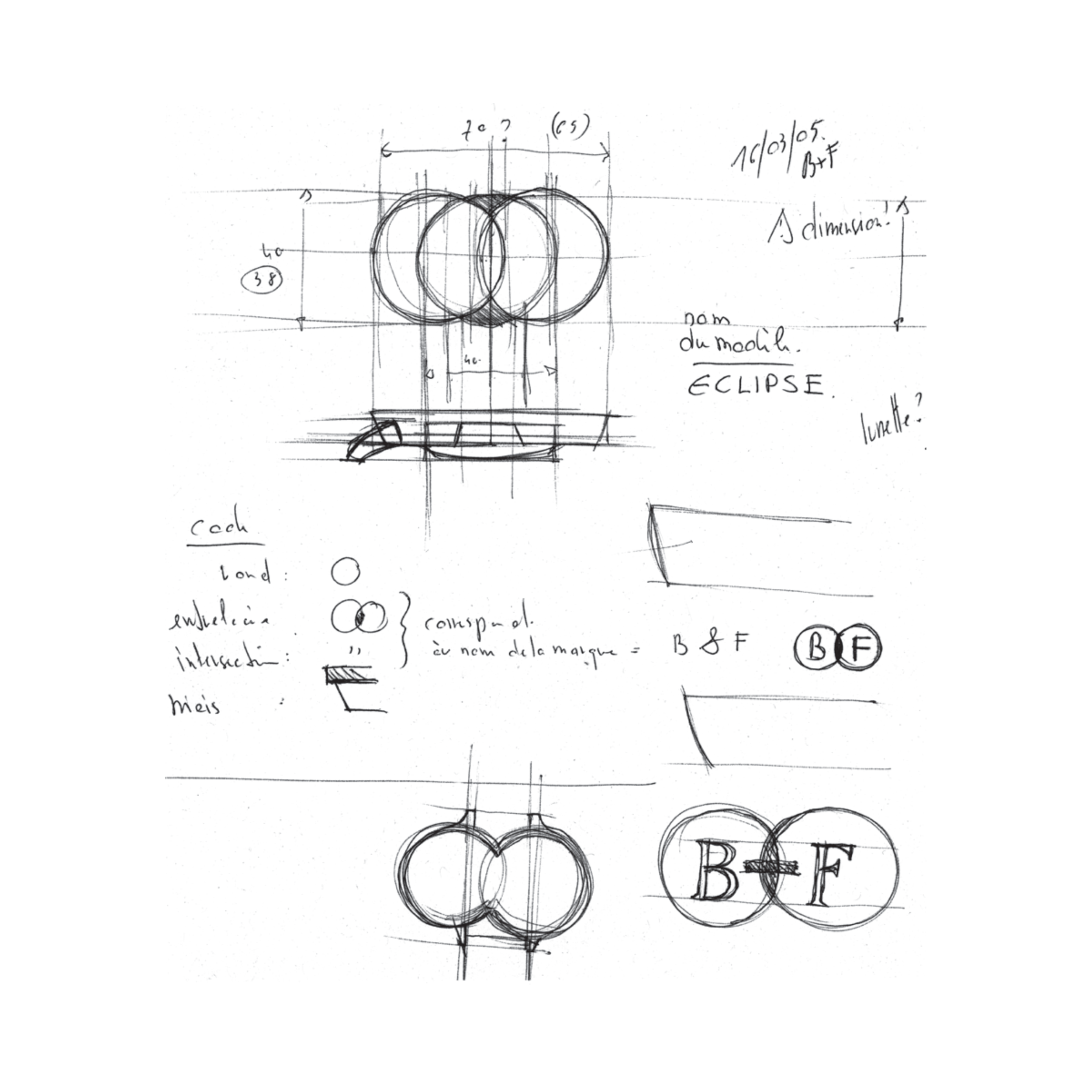
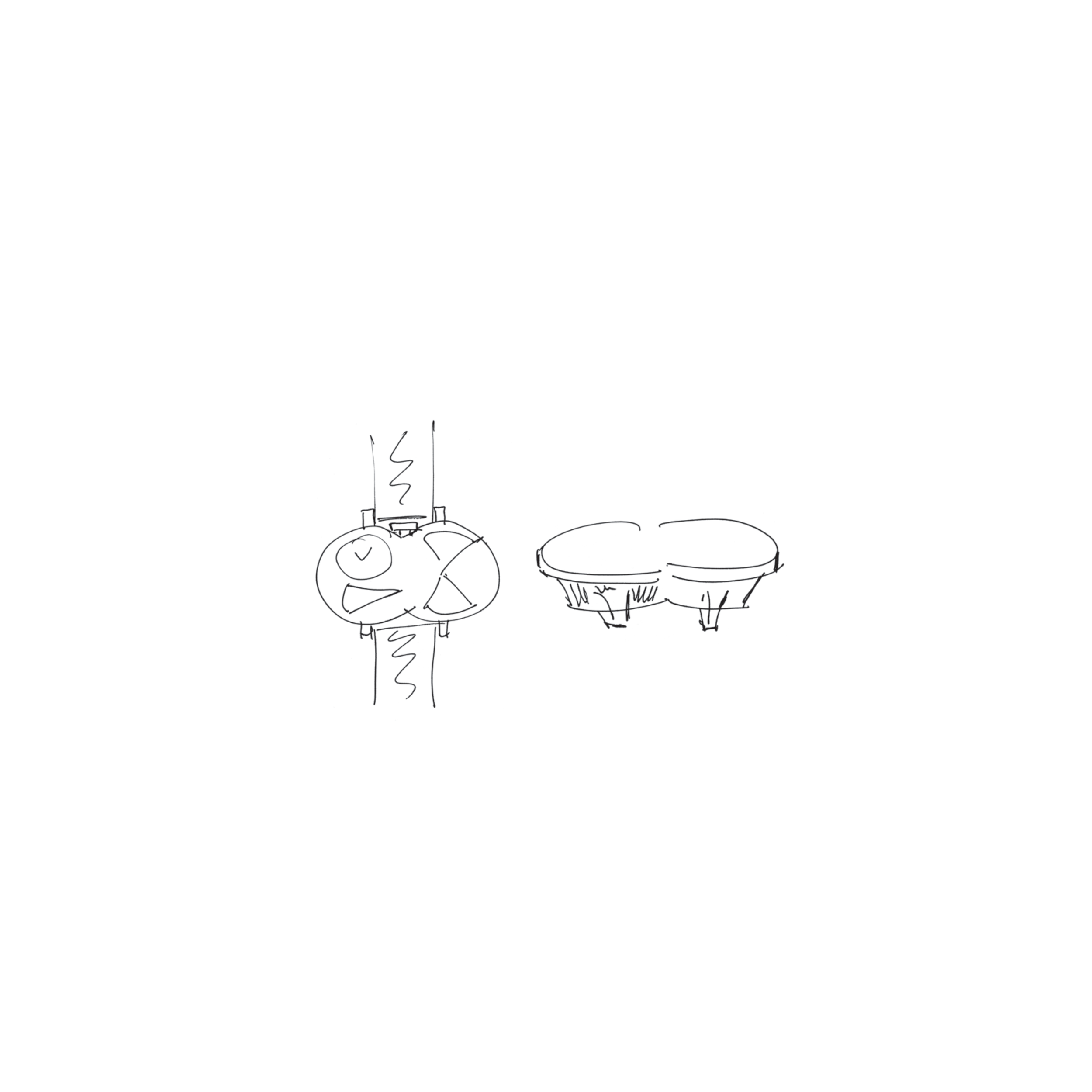
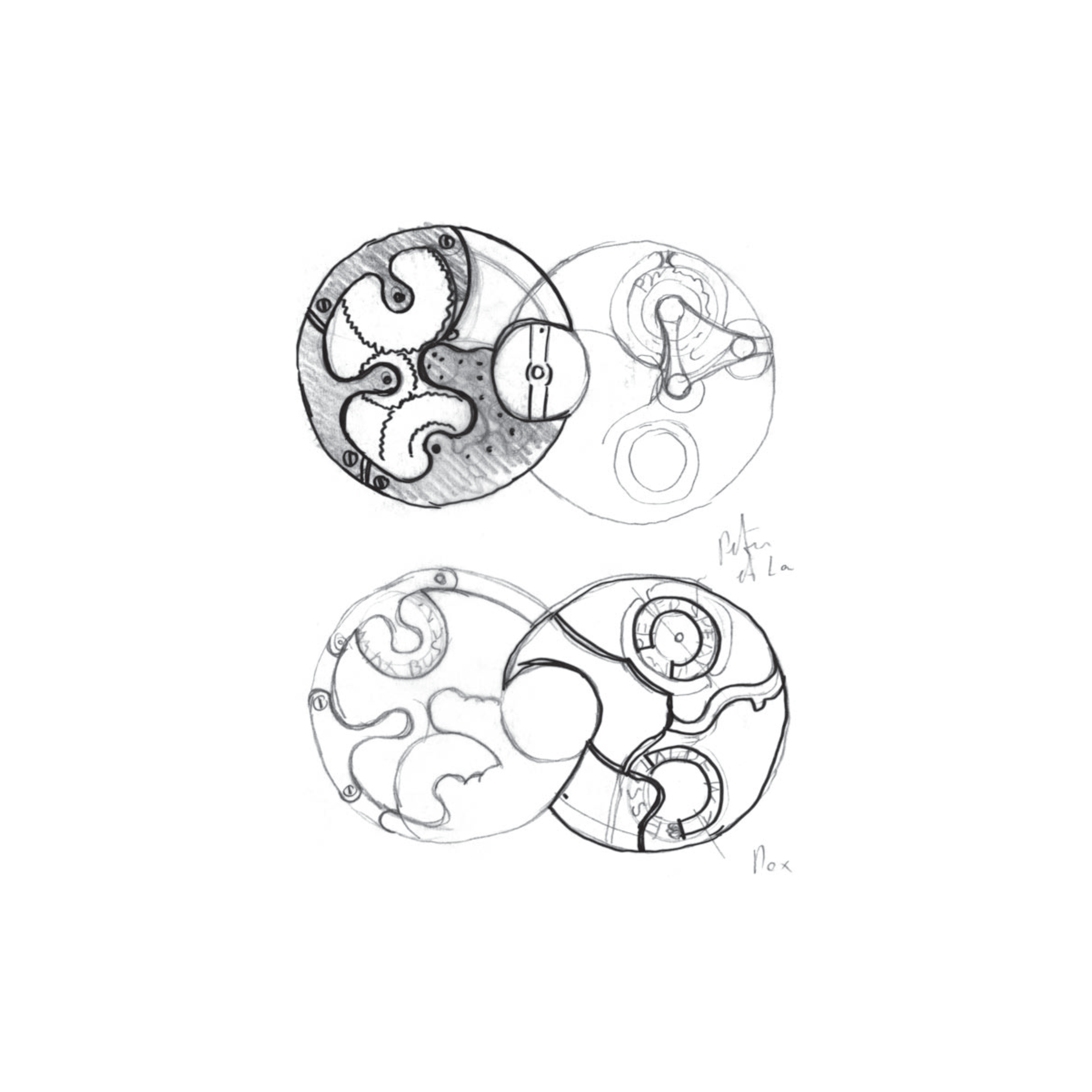
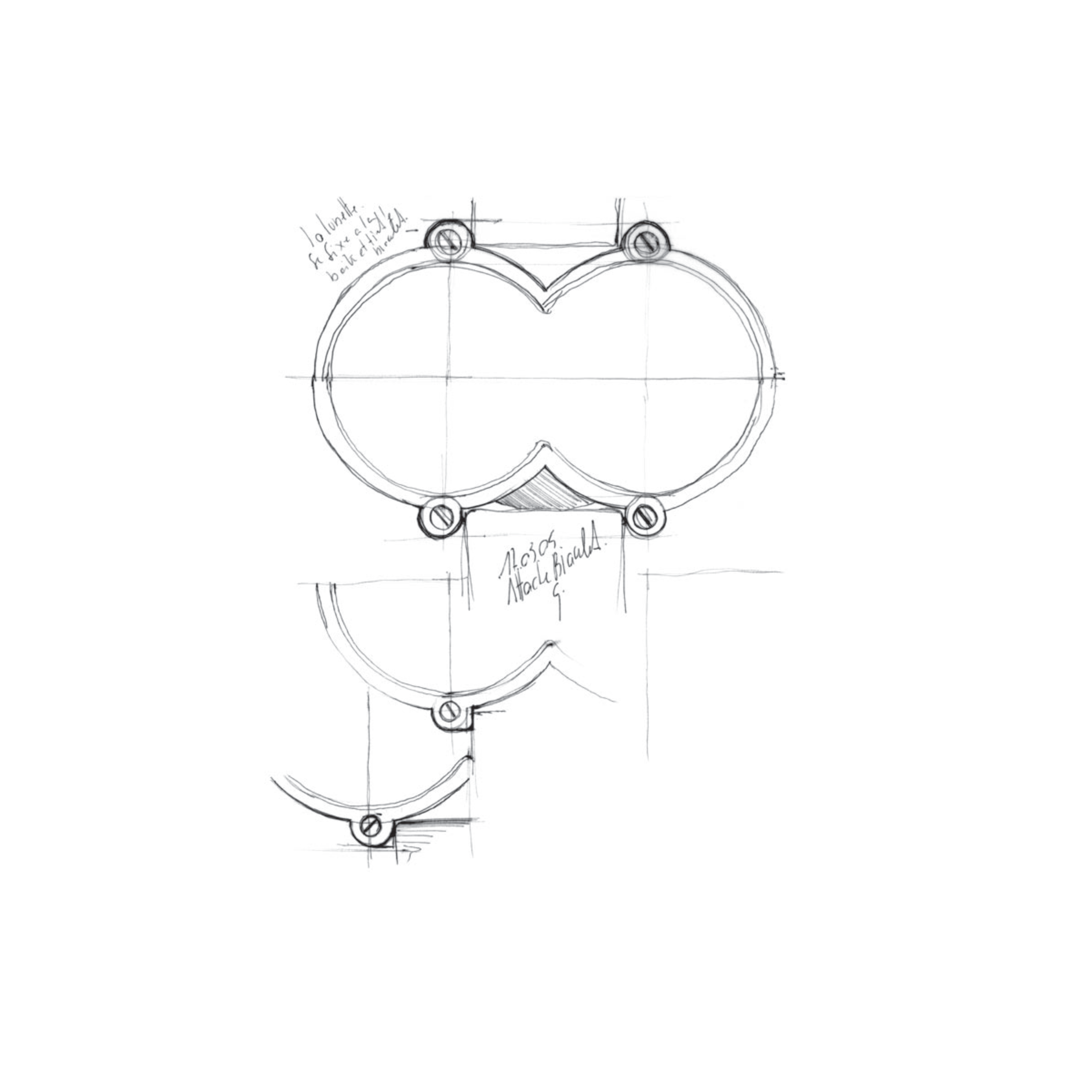
Written by Chessin Gertler | Historical Sketches provided by MB&F