
928 | Thierry Nardone
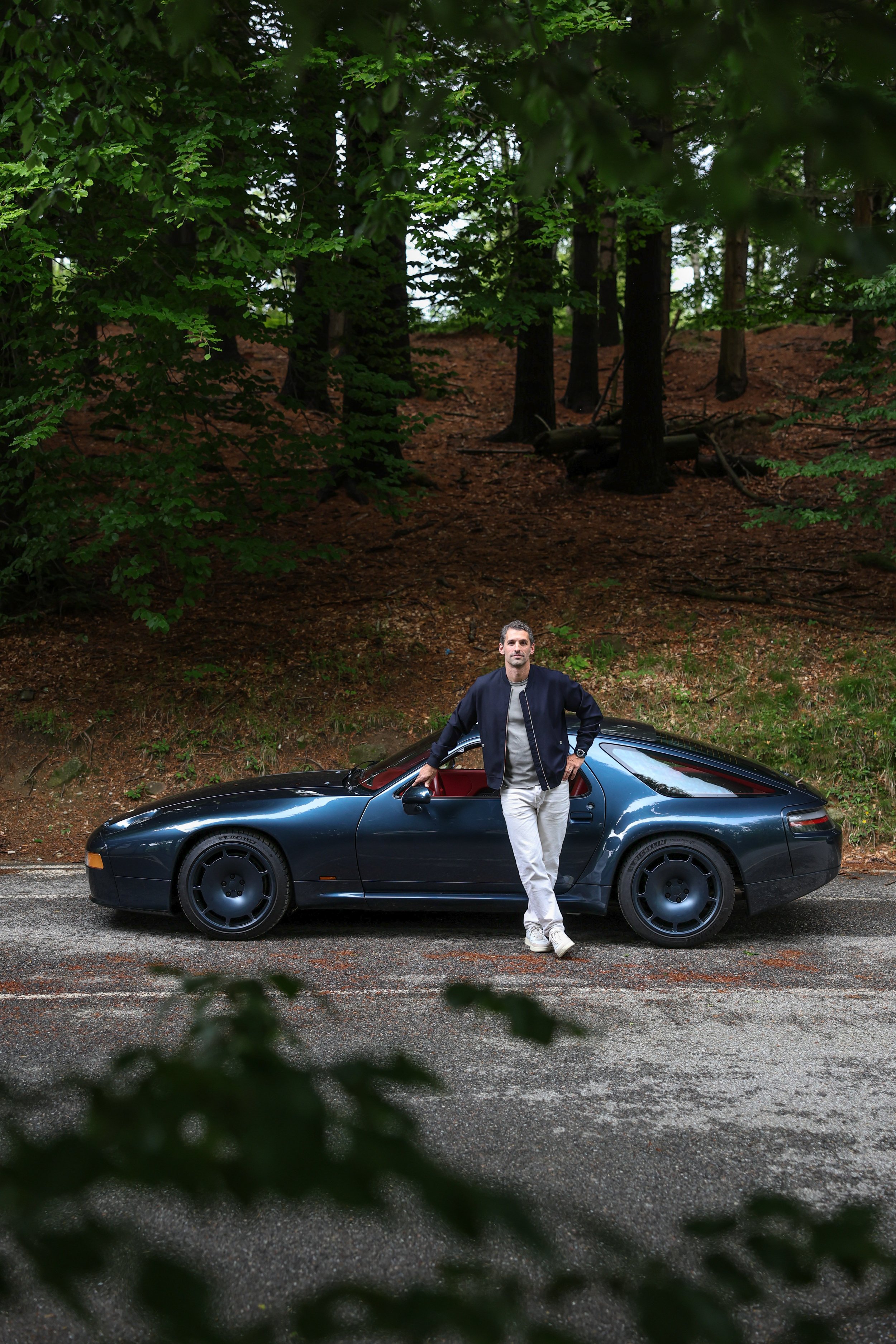
Thierry Nardone’s feet first touched the floor of a car in the rear seat of a Porsche 928, a foundational tactile memory that would go on to define the arc of his personal and professional life.
As a kid, on the weekends, Nardone would drive with his father to high-end dealerships and test-drive cars they couldn’t afford. His father, handsome, charming, always well dressed, would park far enough away to evade automotive discrimination, then walk in like they belonged, striking up a conversation, asking questions and inevitably getting behind the wheel.
There were Ferraris and other objects of distant desire, but the 928 became a boyhood infatuation that Nardone never grew out of. A front-engined V8 grand tourer, the 928 is a distant cousin of the 911, Porsche’s de facto flagship in perpetuity. In the late 70s, the 928 arrived with the ambition of becoming the future of Porsche: modern, expensive, engineered to be a bridge—internally positioned to carry the company forward when the 911 seemed, to leadership of the time, too costly and too compromised to remain the cornerstone forever.
The prophecy didn’t pan out, but the 928 did endure. Seventeen years of production, constant, meaningful evolution, a platform that moved from one era of horsepower into another. It earned a small circle of respect, mostly among those who drove it. But the 928 also carried a stigma that never lifted. Nardone loved what the 928 represented: its engineering, its intent, the way it sat in his memory beside his father. But aesthetically, it never felt grounded. In photos, the proportions always felt off: the long bonnet, the roundedness that dulled the car’s stance, the rear quarters that didn’t land, and the misses in the details that interrupted the overall flow. The strange truth, he says, is that the 928 has an undeniable presence on the road—a distinct authority even, but flattened—in 2D—the camera just doesn’t do it justice. The 928 has always been harder to solve in two dimensions than in real life.
Over time, that unresolved tension between experience and representation crystallized into a conscious ambition for Nardone: to correct the 928; to bring its form into closer alignment with the engineering, intent, and emotional weight the car had carried since his childhood, and doing so deliberately, without chasing performance numbers or superficial modernity, so the car could finally feel as coherent as it always had when driven.
That desire is the manifestation of Nardone Automotive.
Thierry Nardone describes his background as a “big Z,” not a life dedicated cleanly to cars, but one that kept returning to them. He trained briefly in motorsport mechanics, worked in a Porsche specialist shop during the era of the 993 and early 996, and bounced around adjacent jobs. In his spare time, he built and rebuilt things with his hands. Most recently, for a decade, he ran fast-casual restaurants: three locations, dozens of employees, and an operational grind that left him with scars of intolerance for unnecessary complexity.
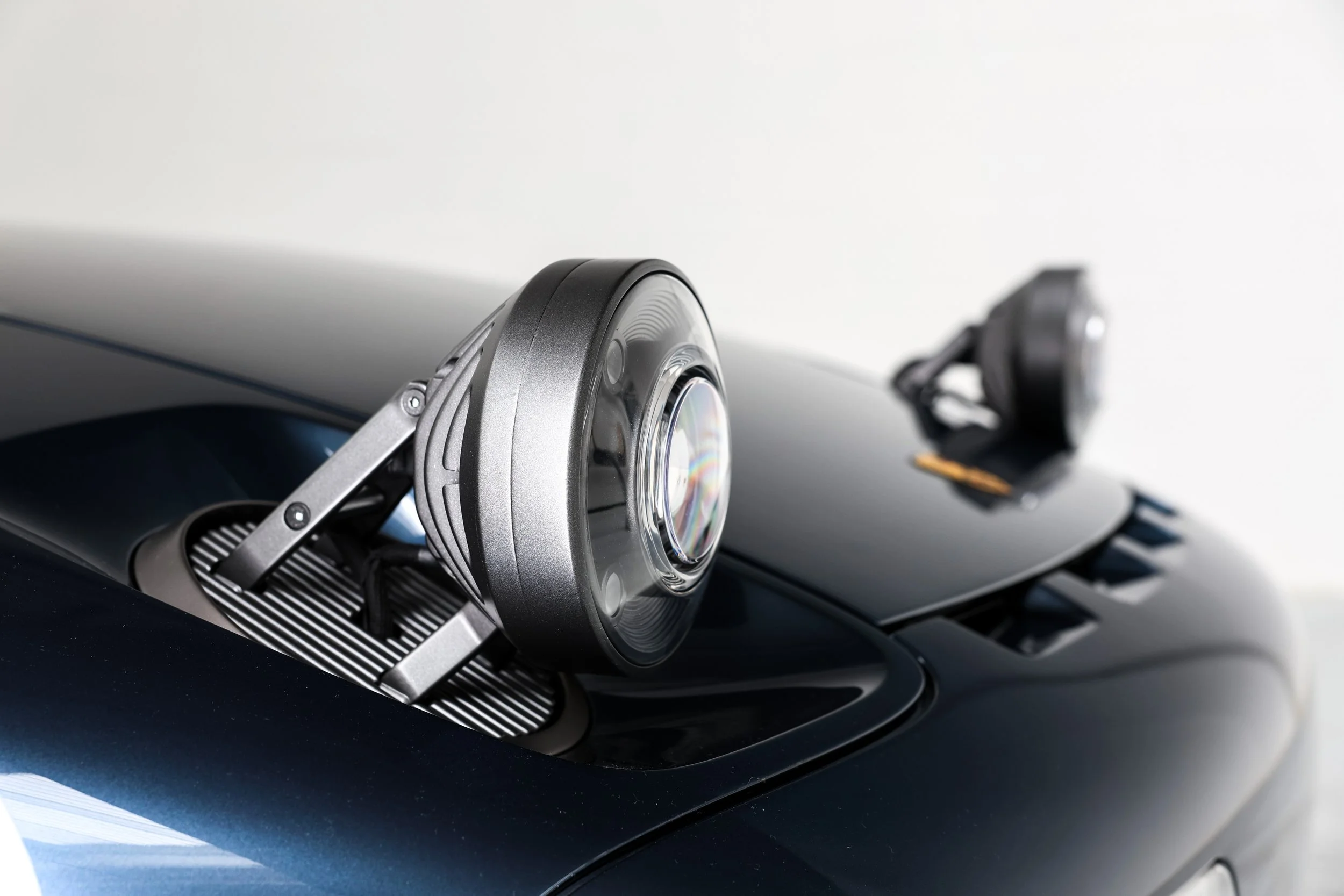
When that chapter reached its end, Nardone started paying attention to the restomod movement more seriously. His Instagram feed made it impossible to ignore: the rise of boutique builders, the new money flowing into old platforms, the appetite for reinterpreting icons elevated through the high of nostalgia. The obvious move would have been a 911 but Nardone had zero interest: too crowded; too many brands orbiting the same silhouette, too many visual clichés passed around like currency. He admired the leaders in the space, especially Singer, but he also understood what many customers didn’t: that most restomods weren’t engineering programs so much as beautiful assemblies of upgraded parts pulled from a deep aftermarket ecosystem. With the 928, that ecosystem was barely existent. If Nardone was going to do this, he wanted to do it in a way that couldn’t be faked, an actual reinvention of the car, rather than a costume. He set an internal rule early: don’t buy the easy solution—Design the parts, engineer the systems, make it coherent, make it yours. And he set another rule that shaped the identity of the whole project: no 911 references. No winks—no ducktail nostalgia, no borrowed gestures. The Nardone 928 would remain a 928, not a 911 restomod in disguise.
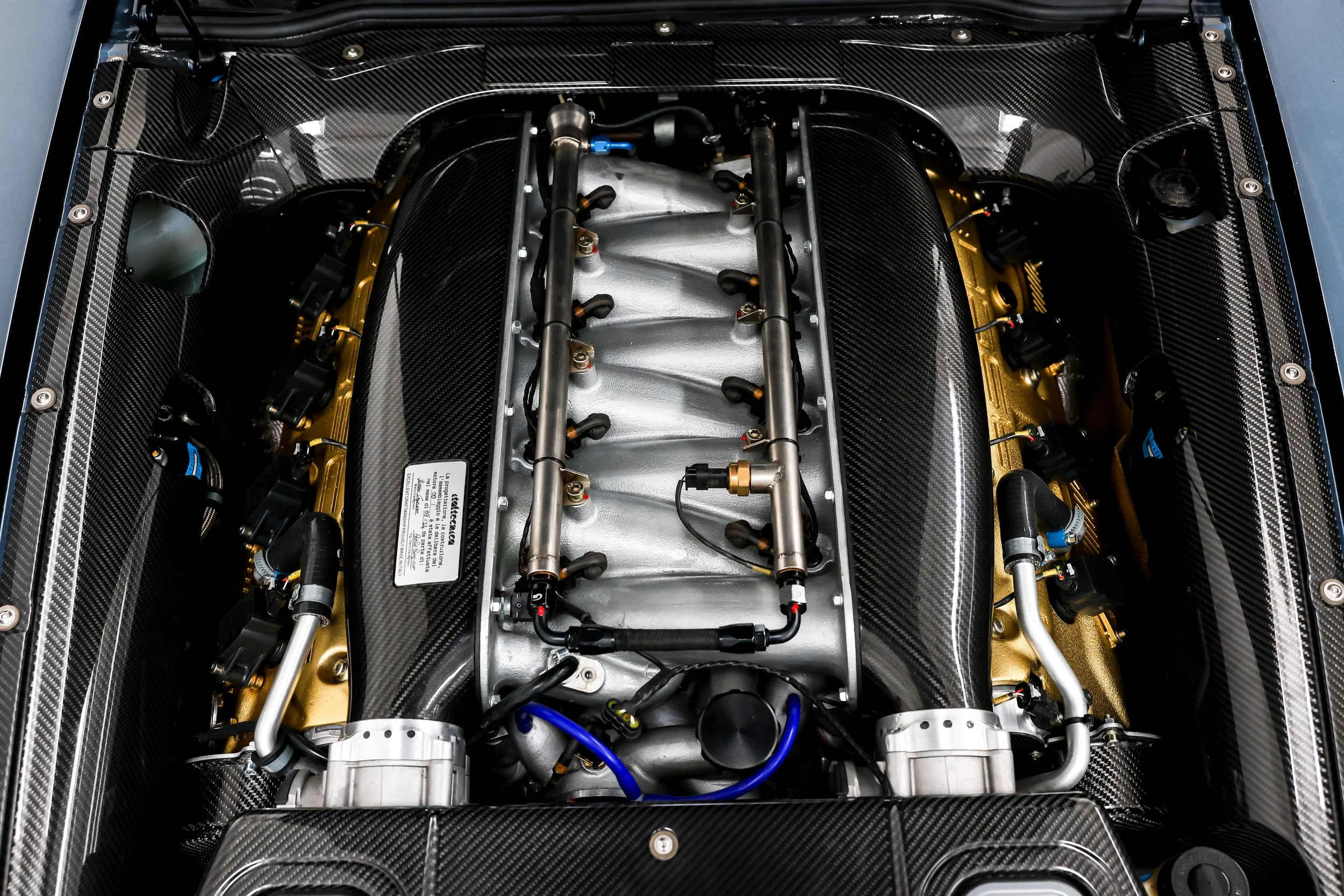
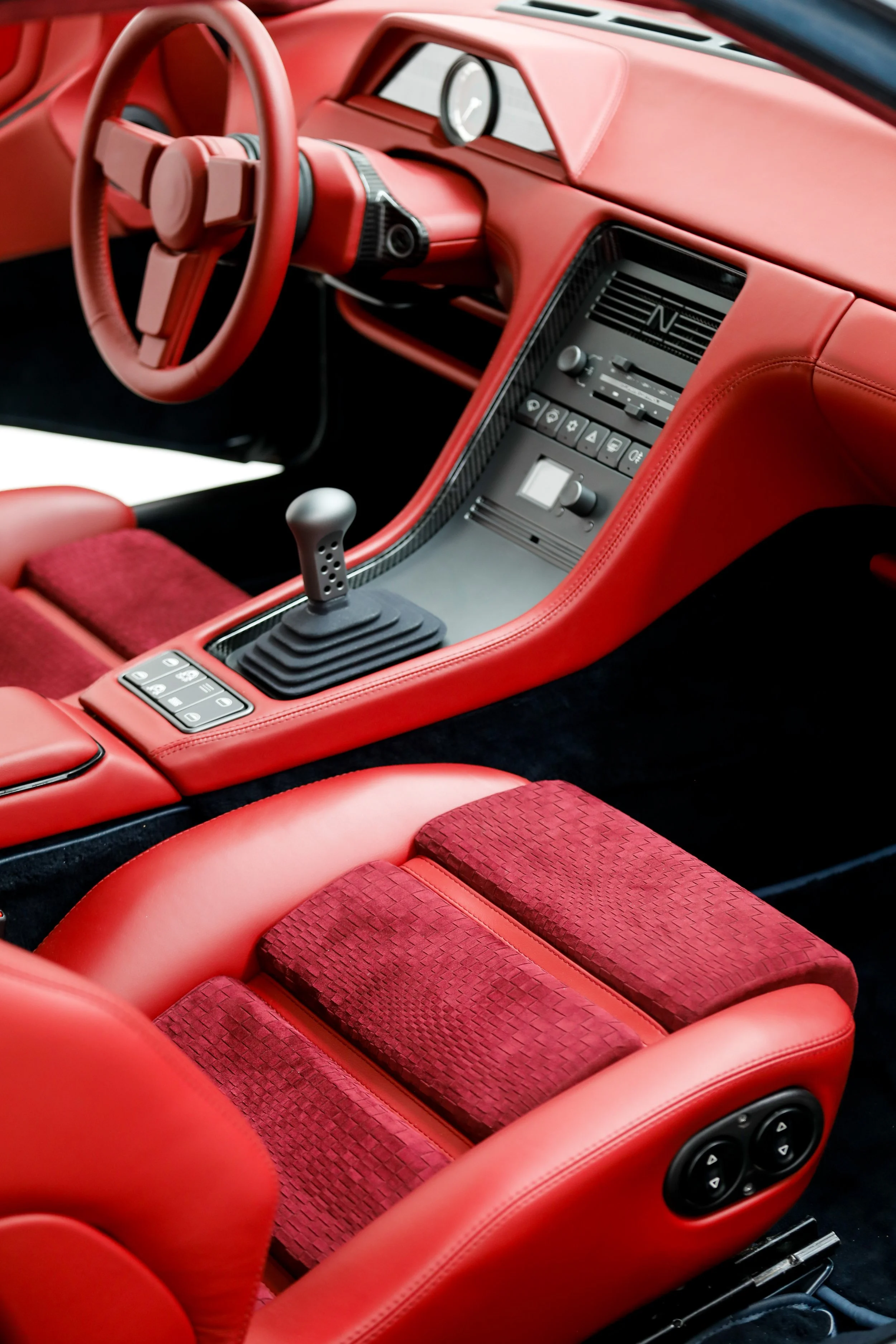
From there, the project took shape through a tightly coordinated set of collaborations with specialist partners chosen for their depth rather than their visibility. Design was led by Borromeo de Silva, the Milanese automotive design studio known for high-end, low-volume reinterpretations of heritage platforms, translating Nardone’s instincts and constraints into a unified exterior and interior that respected the 928’s identity while correcting its unresolved tensions. Powertrain development was entrusted to Italtecnica Engineering, where the original V8 was fundamentally reworked into a modern, naturally aspirated engine program. In parallel, a specialist transmission partner in northern France, Involute Transmission, re-engineered the transaxle into a bespoke six-speed unit tailored to the car’s new performance envelope. What emerged was not a lightly modified classic, but a near-total re-creation: close to three thousand newly designed parts, a ground-up engine and gearbox program, fully custom ratios, revised suspension geometry, and a body that subtly but decisively resolves the original car’s visual hesitations.
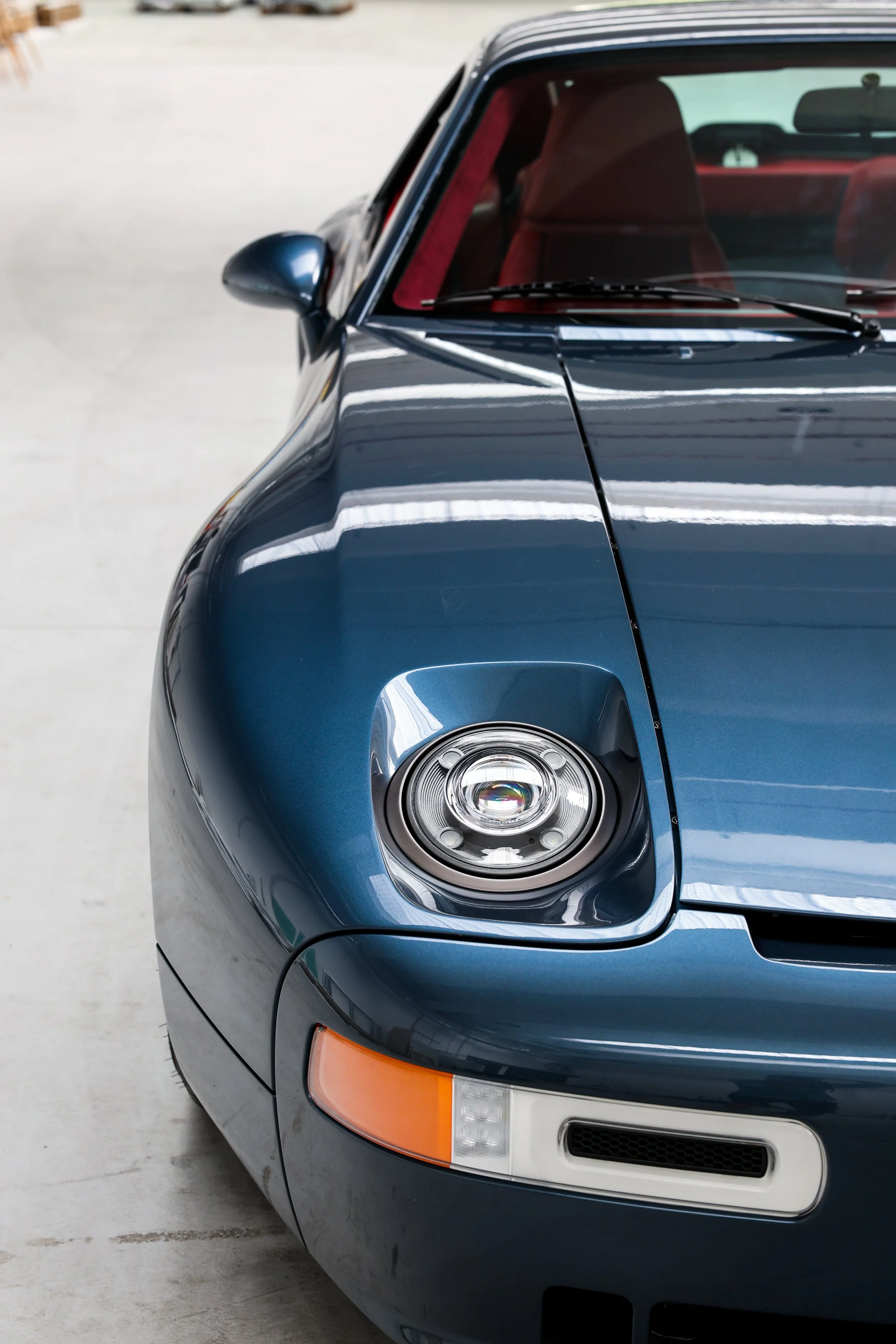
The changes are both surgical and structural: the front and rear bumpers have both been shifted backward to reclaim proportion, the car widened at both axles to settle its stance, surfaces have been smoothed and sharpened to resolve the original’s softness, the glass now sits flush, gaps have been removed or relocated, and the rear reworked so that the shape reads cleaner, more deliberate, and complete. The result is immediate recognition: this is unmistakably a 928, yet not the one remembered. When the original and Nardone’s interpretation sit side by side, the contrast is striking; standing alone, Nardone’s 928 feels certain—as if this is where the design always intended to be.
In his garage—part workshop, part sanctuary—Nardone disassembles the original donor cars himself: a pleasant practicality to fully understand the platform and to allow him to speak with engineers from a position of absolute lived knowledge. His expansive space contains a purpose-built workbench, tools arranged with architectural care, an office area with multiple monitors, a lift system he modified and mounted on rails so he could move cars and subframes easily... Nardone isn’t a founder in love with an idea but one in love with the actual work required to bring his vision to reality.
Nardone Automotive, at least for now, is built of the same spirit: founder-led, lean, obsessive, and deliberately constrained. Nardone doesn’t want a five-hundred-person company. He’s done scale before; he knows the pressure it creates. Instead, he’s building a model that keeps him close to the work while relying on best-in-class partners for execution. The goal isn’t infinite growth. It’s excellence, delivered in a run small enough to remain personal.
First, the Nardone 928: a limited number of cars, enough to matter, not enough to dilute the idea. Then, a more focused and more aggressive derivative, something like a modern GTS interpretation, produced in an even tighter run. And eventually, parts—not alternative accessories—but carefully made components that return the lessons of this program to the broader 928 community, offering those who will never own a Nardone car a way to improve the 928 they already love.
He also has ideas for other transaxle Porsches…
Thierry Nardone founded Nardone Automotive to breathe new life into the iconic Porsche 928, blending cutting-edge engineering with timeless design. From his home base in southern France, Thierry leads a passionate journey that resonates with automotive enthusiasts worldwide. When he’s not busy crafting bespoke machines, he’s in his element tinkering with cars for the pure love of it.
Written by Chessin Gertler with Thierry Nardone | Photography courtesy of Thierry Nardone