
Signal | Trent Dingman & Michael Feng
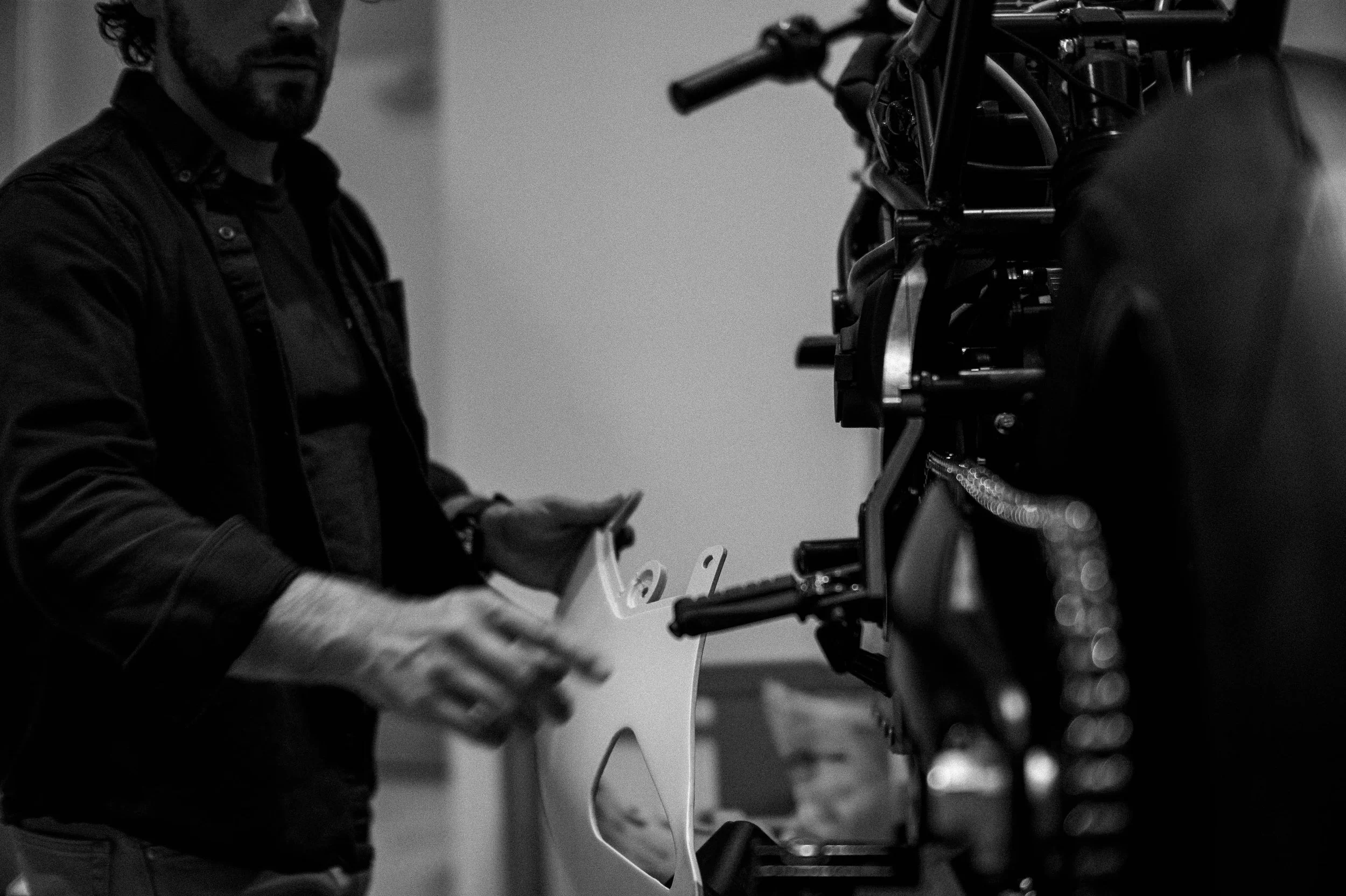
Trent Dingman and Michael Feng have told me more times than I can remember that Project : ARES—the futuristic electric motorcycle concept they are bringing to market with Real Motors—is incidental to the greater movement of the company. The bike, instead, is a signal: a way of assembling a cohort of contrarian thinkers joined not by product affinity, but by resonant disposition. Real Motors is a technosocial experiment concerned first with optimizing talent and pushing the limits of possibility. Trent and Michael are working toward a long-term vision—fifty years out—where merit matters more than hierarchy, and where rigorous design and manufacturing exist symbiotically with instinct, emotion, and creative energy.
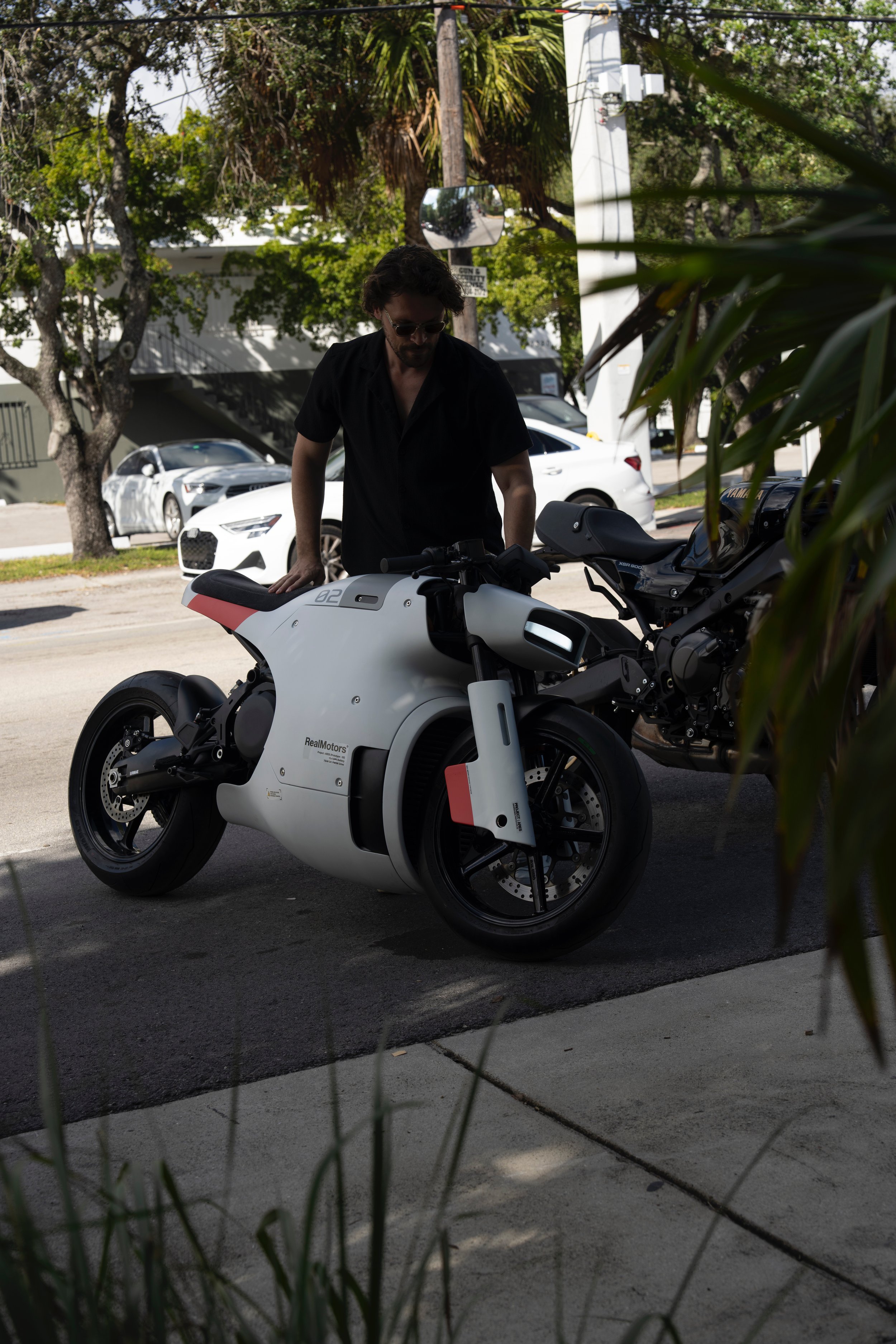
Project : ARES is eye-catching. When I ask about the proportions, design language, and specs, Trent gives me curt answers, always eager to move past the tangible, toward the theoretical, and ultimately, the unknowable.
I first saw the bike online in May of 2024. I wrote Trent, asking how I could support and get involved—effectively seeing if I could formalize my fanboying into something productive. He replied. Weekly calls followed. It was a fast friendship, but an enduring one.
On our first trip together, I caught the Acela down to New York. Trent and Michael flew up from Greenville in a plane piloted by their friend, Peter Waldschmidt. Matteo Barale, an autonomous-driving expert, flew in from Turin. We met at the Brooklyn Navy Yard, toured Newlab, hit up motorcycle hotspots, crisscrossed Manhattan, drank a lot of coffee and beer, and eventually spilled out of an Uber in Koreatown. Peter, Matteo, and I did our best to keep up while Trent and Michael worked on exhausting the restaurant’s kalbi supply. We talked shop. The founders waxed philosophical on Luigi Colani and Daniel Simon. I left dinner for my hotel feeling like I finally understood what this was all about for them—and if I wasn’t into it before, I definitely was now.
The next day, I said goodbye from the patio of Classic Car Club Manhattan as we watched BLADE helicopters take off and land. That trip was a pivotal moment for me in a growing constellation of experiences that solidified my belief in the endeavor. I’ve spent enough time with Trent and Michael at this point to buy into their assertion that the bike is not the point in any way, shape, or form. It’s the first residue of a deeper set of convictions around how endeavor should materialize, and how people should work, build, and relate to one another.
Below are ten bullet point notes on Real Motors after two years of interactions. They’re nonlinear and despite my best efforts, read more like a manifesto than a manual.
On-brand.
Chessin Gertler
Begin with a shared refusal, not a product
The starting point isn’t an electric motorcycle. It’s a refusal to build in the usual way. What comes first is a decision to work together without inheriting the logic of existing companies, markets, or scenes. Early experiments should read less like business ideas and more like probes—ways to watch how attention forms and how value is assigned, without committing to an identity too early.
Use the object as a token
Project : ARES functions less as a product than as a signal. It attracts a particular kind of person—one oriented toward questions rather than conclusions. The object creates orientation and draws people into proximity without resolving itself. The ambiguity isn’t accidental; it’s structural.
Design for the look-back moment
Project : ARES is not optimized around commuting, specifications, or utility. It’s optimized around a moment: you park it, walk away, turn back, and feel something. Movements endure when they create repeatable emotional recognition—small rituals that confirm belonging without explanation.
Operate from first principles
“Pragmatic ingenuity” shows up as a habit of interrogation. Why this material? Why this process? Why this hierarchy? The value isn’t in arriving at definitive answers, but in maintaining the discipline of asking. This is a daily practice.
Treat outsider status as an advantage
Real Motors doesn’t attempt fluency within motorcycle culture. The lack of embeddedness is intentional. Free from tradition, design decisions aren’t burdened by scene expectations. As a company-building strategy, this means recruiting people who care deeply about the outcome but aren’t constrained by category rules.
Make the future felt, not explained
Project : ARES points forward through sensation rather than argument. References to science fiction and speculative worlds matter less as metaphors than as moods. Belief is produced through atmosphere, form, and physical presence—long before it’s articulated.
Keep the ideology larger than the artifact
There’s a clear asymmetry between the certainty of the ethos and the uncertainty of the products. Fifty years out, it’s unknowable what the objects will be. What remains stable is a view of how work should function: talent unencumbered by ladders, politics minimized, output structured more like an academic institute than a company. The artifact will change. The worldview won’t.
Convert attention into magnetism
Traction shows up as inbound pull, not outbound messaging. People reach out unprompted. They offer time, labor, money, and attention before being asked. Growth, here, looks like self-selection—people recognizing themselves in the project before it ever names them.
Let reality adjudicate
The preference for physical prototyping over simulation reflects a broader belief: debate is less useful than contact with the real. Small, tangible experiments collapse skepticism infinitely faster than explanation. The prototype becomes the argument. Reality, not consensus, decides.
Engineer simplicity so it can be rebuilt anywhere
Project : ARES breaks down into a small number of legible sub-assemblies. Even as a prototype, the design points toward clarity and repeatability. For a movement, this matters. Simplicity allows ideas, practices, and structures to be rebuilt elsewhere—without permission, centralization, or dilution. It also enforces restraint, stripping away anything that isn’t essential to the goal. In the case of Project : ARES, the aesthetic vision drives the form. No oversized screens. No apps. No startup theater. No blockers in the emotional and physical connectivity between rider and bike.
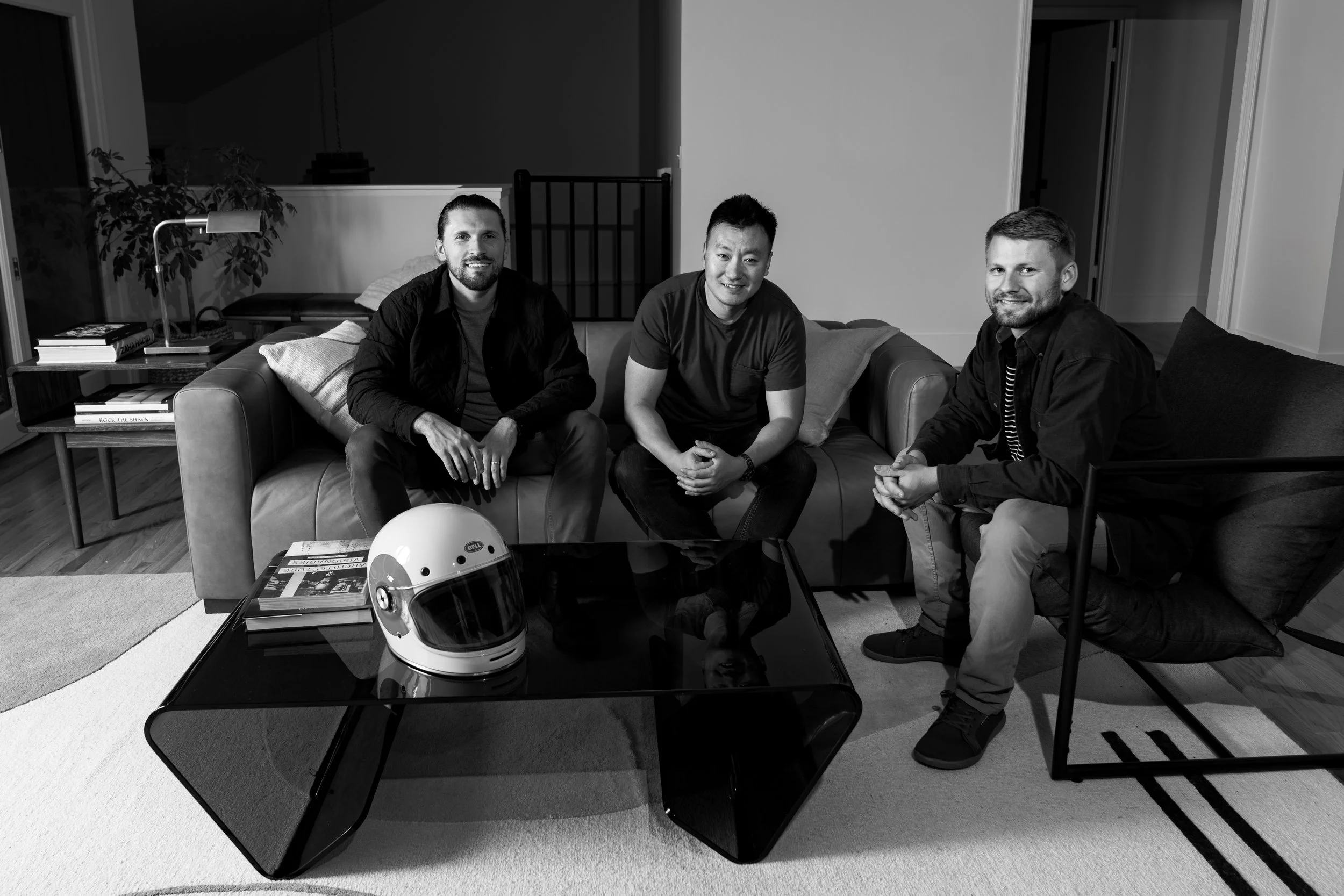
Trent Dingman and Michael Feng are the co-founders of Real Motors.
Trent focuses on product and program development. With a background in mechanical engineering, his work centers on building aspirational products by assembling small, capable teams and giving them the conditions to channel their talents. He describes himself as a social engineer—deeply curious about how people think, work, and relate—and believes that when the right combination of people come together, outcomes that once seemed impossible become achievable.
Michael is an engineer and architect at heart, driven by a lifelong interest in improving the world through design, making, and storytelling. His work spans product design, engineering, and entrepreneurship, guided by a belief that well-considered objects and systems can make life more creative, emotional, and meaningful.
Written by Chessin Gertler | Photography provided by Real Motors